

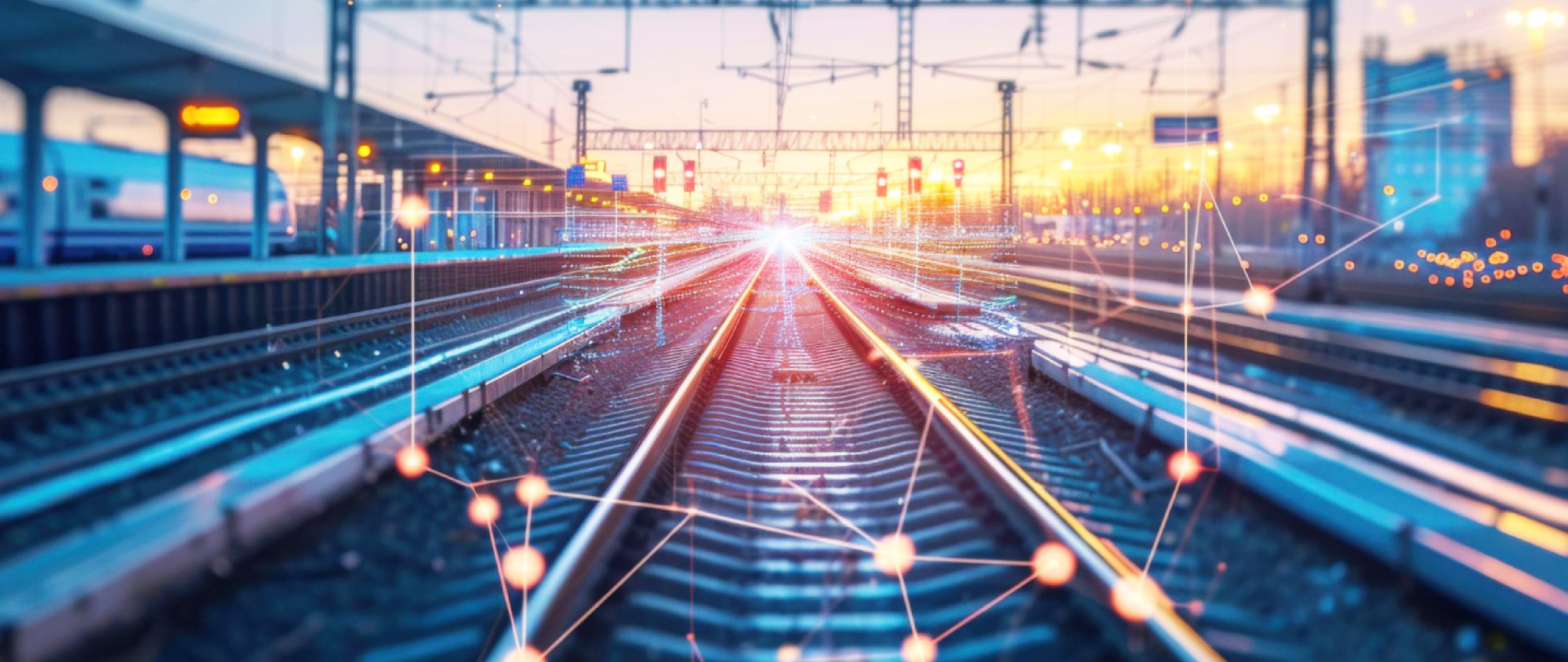
In one of the world’s largest railway networks, a single locomotive failure doesn't just stop one train—it creates a ripple effect that delays thousands of passengers and tons of critical freight. For the national rail operator, moving away from "fixing things when they break" toward "predicting when they might" was no longer a luxury; it was a strategic necessity.
The Challenge: The Cost of the Unforeseen
Operating across 19 zones, the operator relied heavily on time-based maintenance (e.g., every 45 or 180 days). Despite these rigorous schedules, locomotives frequently faced unplanned downtime enroute. The challenges were multifaceted:
- Vast, Underutilized Data: Massive telemetry from GPS, traction motors, and brake systems remained untapped.
- Manual Dependency: Inspections were largely manual and depot-bound.
- Inventory Guesswork: Workshops lacked the data to forecast which parts would actually be needed, leading to high expenditure and waste.
The Transformation: AI at the Helm
To modernize, the operator partnered with Exponentia.ai to build an AI-enabled Predictive Maintenance solution.
The Tech Stack
The solution utilized Kafka for real-time ingestion of IoT sensor data, which was then consolidated with historical fault logs into Apache Druid. Using Catboost Classification models, the platform could analyze complex sequences to predict failure probabilities with high accuracy.
Actionable Insights
Through a custom Qlik Predict dashboard, maintenance teams now receive alerts on the probability of component failure—be it a traction motor or a cooling system—allowing them to intervene before a breakdown occurs.
Impact: Results that Move the Nation
The shift to predictive intelligence has delivered measurable improvements to the network’s reliability:
- Increased Availability: A 15% boost in locomotive availability means more engines are ready for service.
- Cost Efficiency: A nearly 18% drop in inventory costs by optimizing spare part procurement.
- Reliability: Most importantly, a significant reduction in unplanned downtime has directly improved train punctuality, ensuring a smoother journey for millions.
Conclusion
By embracing IoT and AI, the operator is not just maintaining engines; it’s engineering a more reliable future for national transport.
.jpg)








%20(1).jpg)

.jpg)



.svg)

.svg)
.svg)
.svg)