
Our Newest Insights
Discover fresh ideas and recent industry insights carefully chosen by our team of professionals.



































Engineering the AI-Native Enterprise: Perspectives from Industry

Over the past several months, I’ve had the opportunity to speak with leaders across manufacturing, media, life sciences and financial services about how AI is evolving inside their businesses.
Some of these conversations have been through Applied AI Outcomes. Others have happened at industry forums, including our recent BFSI Leadership Forum with Databricks, where I moderated a discussion with financial-services leaders around a deliberately practical theme: AI That Moves the Needle
What interests me most is not what AI can do. We already know its capabilities are advancing extraordinarily quickly.
The more important question is: what changes when AI becomes part of how an enterprise actually operates?
Across industries, I see four perspectives shaping that conversation

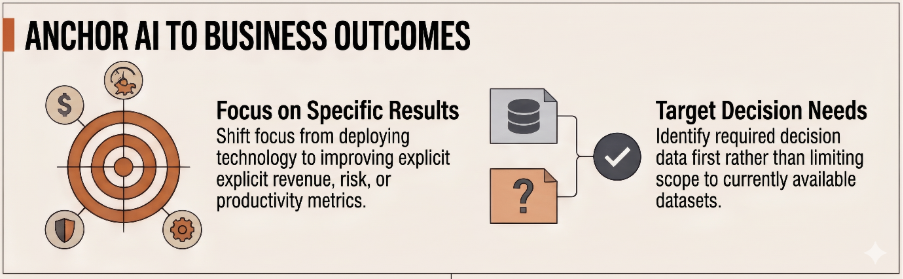
1. Start with the outcome, not the technology
Perhaps the strongest theme I hear is the need to anchor AI to an outcome.
In life sciences, my conversation with Arvind Balasundaram explored the importance of looking beyond the data already available and thinking about the information required to address a specific business objective.
The same thinking surfaced in financial services. At our Databricks forum, I asked participants to come with one strategic outcome they wanted to impact over the next 12 months, whether revenue, retention, operational efficiency, risk or employee productivity.
That changes the conversation from“Where can we deploy AI?” to“Which business outcome or decision are we trying to improve?”
AI should follow the outcome, not the other way around.
2. Autonomy needs context
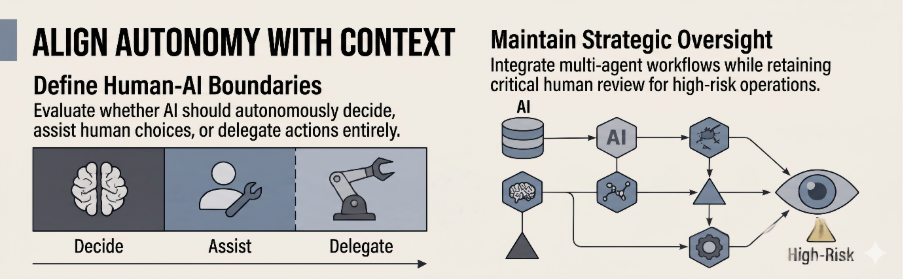
Agentic AI is understandably attracting enormous interest. But the industry conversations I’m hearing suggest that the goal cannot simply be greater autonomy.
In manufacturing, my discussion with Ashish Srivastava of Daikin Applied Americas brought out the realities of introducing AI into operational environments. Questions of reliability and predictability are accompanied by a very human question: is AI here to replace people or help them?
Financial services introduces another dimension. In preparing for our panel discussion, we explored how multiple agents could operate across processes while retaining human oversight for critical decisions. We also questioned what an AI-native financial institution designed today might do differently from one built a decade ago.
This leads me to a more useful question than whether something can be autonomous:
Should AI make this decision, assist with it, or leave it with a human?
An AI-native enterprise needs to be deliberate about where AI acts, where people decide, and where they work together.
3. Trust becomes a continuous discipline
The difference between experimentation and production also comes through repeatedly.
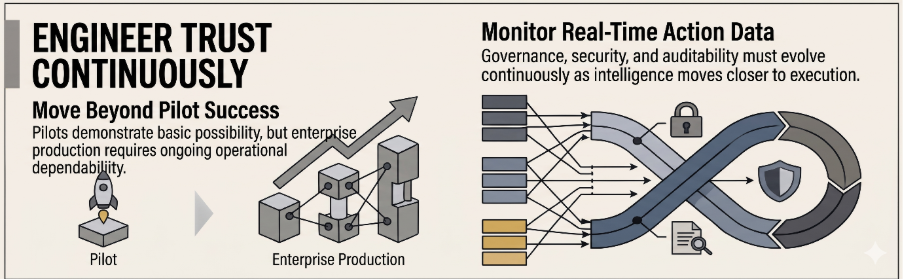
A pilot demonstrates possibility. Production demands dependability.
In manufacturing, the discussion went beyond the quality of source data to the importance of monitoring data created when AI itself is in action, together with continuous training and monitoring of AI outcomes.
In financial services, the questions become even more consequential. As organizational data is increasingly consumed by copilots, AI agents and autonomous workflows, governance has to evolve with it. Auditability, risk, security and human oversight become more important as intelligence moves closer to action. This was a core part of the discussion was designed for the Databricks BFSI panel.
Trust cannot be a checkpoint before deployment. It has to be continuously engineered into how AI operates.
4. AI maturity is about operating differently
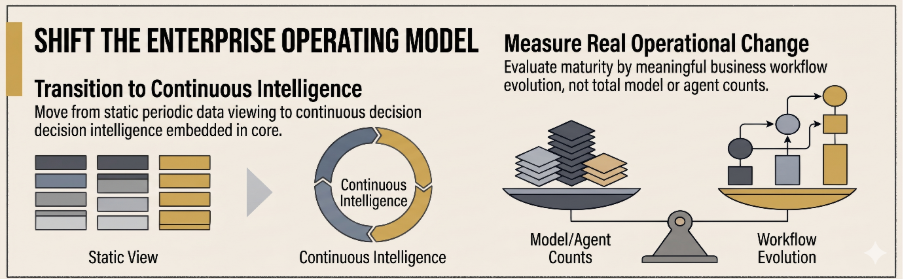
Perhaps the biggest perspective I take from these conversations is that becoming AI-native is ultimately an operating-model shift.
In media, Bhaskar Borah, SVP Marketing at Dow Jones, sees the questions evolving beyond AI itself to how organizations make data AI-ready, unlock enterprise knowledge, improve discovery, and strengthen decision intelligence.
In life sciences, Arvind Balasundaram used an analogy that stayed with me: enterprises have traditionally looked at “stills,” while advances in AI increasingly allow us to watch the “movie.” Intelligence can become more continuous, contextual and closer to the point of decision.
And after our financial-services panel, one observation stood out to me: the breadth of AI use cases across insurance and financial services indicates that AI is becoming increasingly industrialized and integrated into core business functions
That is an important distinction
AI maturity should not be measured by the number of pilots, models or agents an enterprise has. It should be measured by how meaningfully intelligence changes the way the enterprise operates.
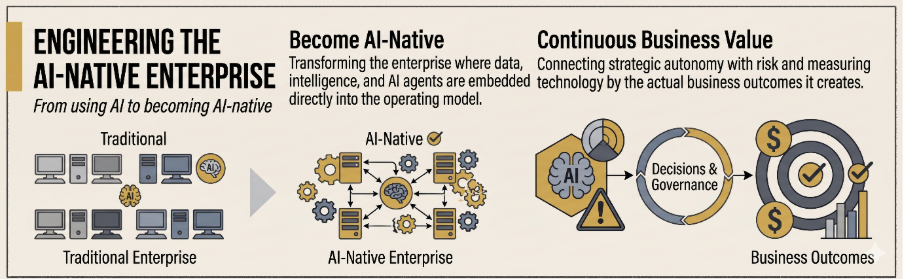
From using AI to becoming AI-native
Taken together, these conversations are shaping my own understanding of the AI-native enterprise.
It is not simply an enterprise with more AI.
It is an enterprise where data, intelligence and increasingly AI agents become part of the operating model. Where intelligence moves closer to decisions. Where autonomy reflects context and risk. Where governance evolves as AI evolves. And where technology is ultimately measured by the business outcomes it helps create.
That is what Engineering the AI-Native Enterprise means to me.
Not simply becoming an enterprise that uses AI.
Becoming an enterprise that operates differently because of it.
What this means from Exponentia.ai’s perspective
At Exponentia.ai, we see a few capabilities becoming increasingly important as enterprises move towards an AI-native operating model:
- Establish an AI CoE for scale: Create the enterprise mechanism to build, govern, operate and drive adoption of AI consistently across the organization.
- Build Vertical AI around business outcomes: Move from generic AI capabilities to persona-based outcome centers designed around specific functions, roles, decisions and measurable outcomes.
- Reimagine workflows around humans + AI agents: Don’t simply add AI to existing processes. Redesign workflows around where people decide, where agents act and where they work together.
- Engineer for production and adoption: Build governance, monitoring, operations and adoption into the AI lifecycle so successful use cases can move beyond pilots and scale reliably across the enterprise.
For us, Engineering the AI-Native Enterprise is ultimately about bringing these elements together to make AI repeatable, governed and outcome-led at enterprise scale.
Continue the conversation
The AI-native enterprise is still being defined. And some of its most valuable perspectives are coming from leaders putting AI to work inside their businesses today.
Through Applied AI Outcomes, I’m continuing these conversations with industry leaders about what’s working, what’s changing, and what we are discovering as AI moves deeper into the enterprise.
If you’re leading this change in your industry, I’d value your perspective. Join me for an Applied AI Outcomes conversation and help shape the dialogue on what comes next.
From AI Experiments to Enterprise Impact: The Shift to Agentic Value

For the past few years, enterprise AI has been defined largely by experimentation. Organizations have launched pilots, tested generative AI applications, introduced copilots, and explored how AI can improve employee productivity and customer experiences. This experimentation has been important, helping enterprises understand the technology, identify potential use cases, and assess where AI could create value.
But the conversation is now changing. For enterprise leaders, the more important question is no longer simply what AI can do, but what measurable business value it can create. As AI capabilities mature, organizations are moving beyond experimentation toward a model in which AI is expected to influence decisions, support business processes, and deliver tangible outcomes.
One of the most significant developments in this transition is the movement from AI assistants to AI agents. The first wave of enterprise AI focused on assistants that could summarize information, draft content, search knowledge, analyze documents, and help employees complete routine tasks. AI agents represent a broader opportunity because they can potentially work across multiple steps of a process. Instead of simply responding to a request, an agent can interpret an objective, gather relevant information, determine the next action, interact with enterprise systems, and execute parts of a workflow within defined boundaries.
This changes the proposition of enterprise AI. An assistant can help an employee work faster, while an agent has the potential to change how a business process itself operates. For example, an AI assistant could help a sales representative summarize a customer interaction, while an agentic system could potentially combine customer history, product information, previous interactions, and business rules to recommend the next best action and initiate parts of the follow-up process. The opportunity is significant, but so is the responsibility. As AI becomes more autonomous, enterprises need stronger governance, reliable data, defined ownership, and appropriate human oversight.
This also explains why moving beyond the pilot remains one of the biggest challenges in enterprise AI adoption. Building an AI pilot that demonstrates technical feasibility is becoming easier, but integrating that capability into a real operating environment is considerably more complex. Enterprise deployment involves workflows, data access, governance, employee responsibilities, technology integration, and performance measurement.
A pilot can demonstrate that an application works. Production deployment needs to demonstrate that it creates value consistently. Enterprises can accumulate successful proofs of concept without necessarily changing business performance. The real test is whether an AI initiative can move into the processes where decisions are made and work actually gets done. This requires organizations to evaluate AI use cases based on business outcomes rather than technological novelty.
Another important development is the growing role of AI in decision-making. Enterprises are gradually moving from systems that primarily report what has happened toward systems that can help determine what should happen next. In banking, this could involve customer engagement, risk decisions, or relationship-manager productivity. In retail, AI can support demand planning, customer personalization, and inventory decisions. In manufacturing, it can contribute to operational optimization and predictive decision-making.
Across these examples, AI creates greater value when intelligence is connected to action. That makes the underlying data foundation increasingly important.
An AI system can only be as reliable as the information available to it. If enterprise data is fragmented, outdated, poorly governed, or disconnected from business context, AI may produce outputs that are difficult to trust or operationalize. As organizations move toward AI agents, this challenge becomes even more significant because agents may need to access information across multiple systems and use it to determine what action to take.
Trusted data architecture is therefore a strategic requirement for AI, not simply an IT consideration. Enterprises need to understand where their data comes from, whether it is reliable, how it is governed, and whether it can be made available to AI systems in the right context. The convergence of data, analytics, and AI is becoming central to moving from experimentation toward enterprise-wide impact.
This shift also requires a different approach to measuring AI success. The number of pilots launched or employees using an AI assistant does not necessarily indicate business value. Leaders need to ask whether AI is reducing process time, improving customer response, increasing employee productivity, enabling faster decisions, reducing cost-to-serve, or creating new revenue opportunities. These are the measures that connect AI investments to business performance.
At Exponentia.ai, the focus is on helping enterprises bring together data, analytics, and AI with the business decisions and processes where measurable value is created. As organizations move toward more autonomous AI, combining intelligent applications with trusted data and enterprise context will become increasingly important.
This broader conversation will be explored at AI Reality for Business Impact - From AI Assistants to AI Agents, an exclusive executive gathering hosted by Exponentia.ai, Qlik and Inphinity. The event will bring together senior technology, data, analytics, and business leaders to discuss moving beyond AI pilots, creating measurable business impact, and building the trusted data foundation required for successful AI initiatives.
The evening will include perspectives on analytics and AI, a panel discussion, and a data keynote focused on QTC and Talend, followed by networking and dinner. The gathering is designed for senior leaders including CIOs, CTOs, CDOs and CDAOs, Heads of Data & AI, Heads of Analytics, Heads of IT, and Digital Transformation Leaders.
As enterprise AI enters its next phase, the conversation is no longer about how many experiments an organization can run. It is about how effectively those investments can translate into better decisions, smarter operations, and measurable business outcomes. That is the real shift from AI experimentation to AI reality.
Register Now

The Enterprise AI Context Gap: Why Business Questions Remain Hard to Answer

The reason your AI keeps guessing, and what your people know that it does not.
One conversation from the Databricks Data and AI Summit 2026 keeps coming back to me. In conversation with a data leader, I learnt how quickly her team had built an AI agent. Then, almost in the same breath she admitted she would not hand it a real question from her board just yet. That same sentiment surfaced repeatedly across the three days.
Teams can stand up an impressive AI agent in a matter of days. Pointing it at a genuine business question, but trusting the answer is where things get tricky
That gap between the first demos and the board-level queries is the real story of enterprise AI right now, and it is worth being honest about how wide it is.
The paradox in the numbers
Most organisations have already adopted AI in some measure. McKinsey pegs that number to 78 percent AI use in atleast one business function of the organisation. The difficulty shows up at the next stage. Only about 6 percent firms qualify as genuine high performers with meaningful impact on earnings.
95 percent of generative AI pilots deliver little to no measurable effect on the P&L as per MIT's NANDA study.
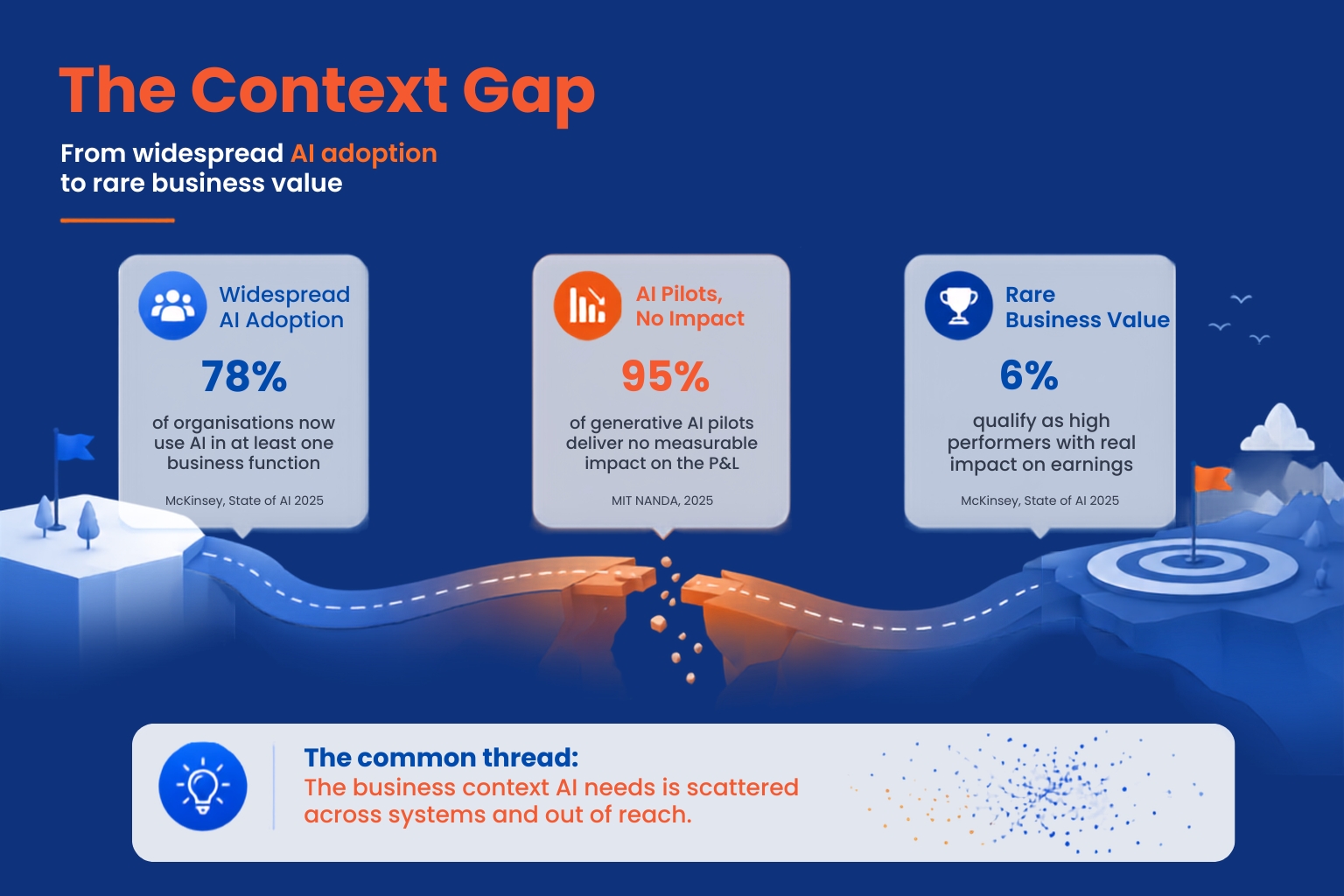
So, we have near universal adoption sitting alongside near universal disappointment.
Gartner expects more than 40 percent of agentic AI projects to be cancelled by the end of 2027, citing runaway cost, unclear value, and weak controls. The technology dazzles in the demo and then stalls on the way to the P&L
This is a key value problem the industry cannot ignore. The reflex is to blame the models. Now with newer, larger, cheaper, faster models over the past year, the value gap has barely moved. It’s pointing to a bottleneck somewhere else.
The real bottleneck is business context—and it’s fragmented across the enterprise.
Getting insight out of data is still hard, even with the best models available. Data is the ground truth of the business, and meaning sits a layer above it, in context: what a field represents, which table is authoritative, how your business defines net sales, why a particular exception exists. That context is the difference between a number and an actionable answer.
Here is where the difficulty lies. In most enterprises, that context is scattered. It lives across dashboard KPIs, SQL queries, pipelines, wikis, SOPs, tickets, documents, and chat threads, and a fair amount of it survives only in the heads of a few experienced people. Analysts estimate that roughly 90% of enterprise information sits in unstructured places like documents, emails, and logs rather than in tidy tables.
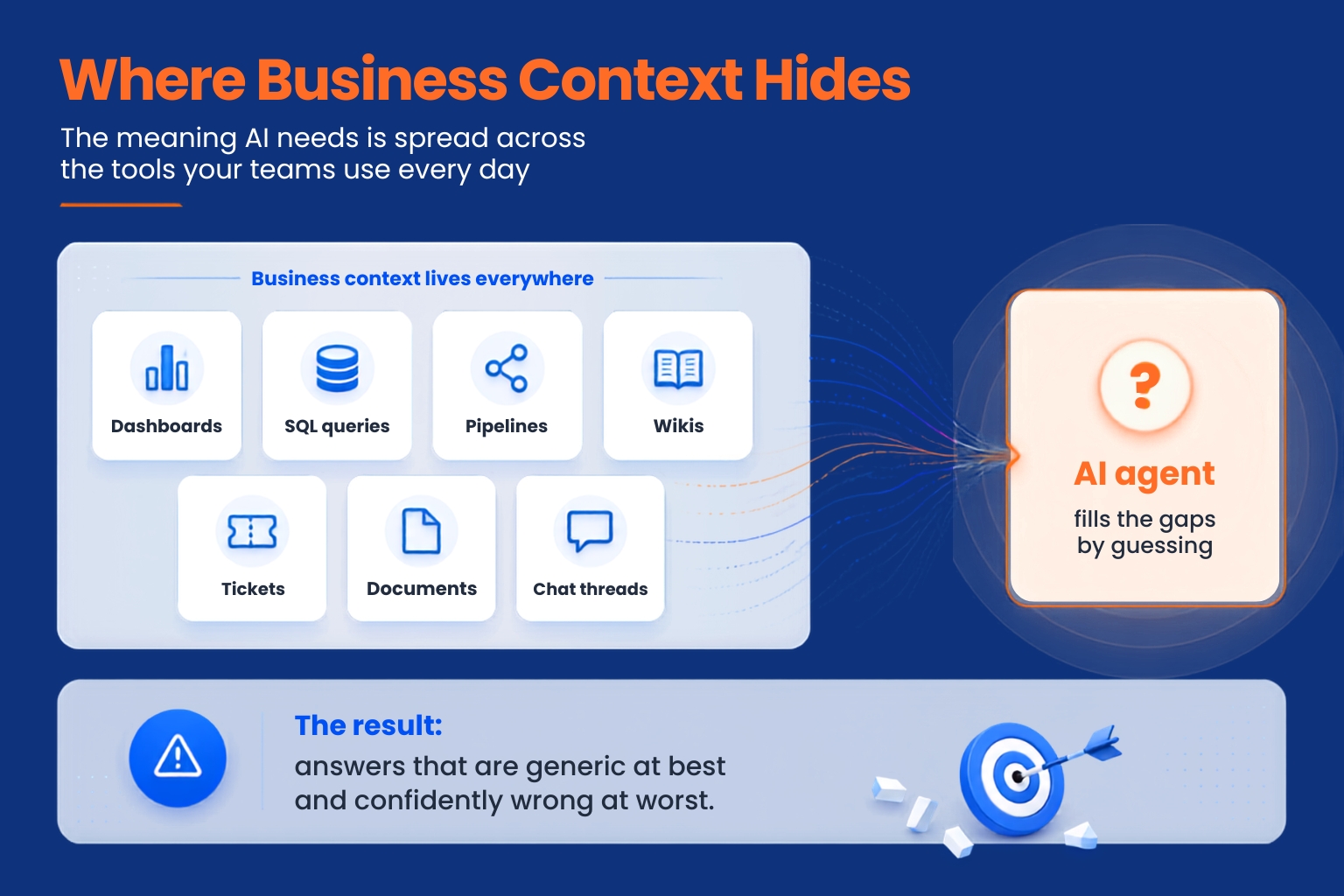
When an AI agent cannot easily find the context it needs, it does what a confident junior employee might do. It fills the gap with inference. It guesses. The result is an answer that is generic at best and a red herring at worst. And crucially, it is wrong with total confidence, delivered at machine speed, with no one in the room to catch it.
The current generation of agents tries to compensate by probing iteratively, making call after call to work out what a term means or whether a source can be trusted. That process is slow, expensive, and still forces a compromise on quality. Every one of those extra steps is a tax you pay because the context was missing to begin with.
The consequence is the one that matters most to any leader betting on AI: unacceptably poor performance on exactly the data driven decisions and actions the investment was meant to improve.
Without shared meaning, enterprise data remains dissconnected
The fix is to give your AI the same shared understanding of the business that your most experienced people carry in their heads, in a form in which a machine can act on.
This is what an enterprise ontology, or semantic layer, provides. It captures the nouns of your business (customer, order, supplier, store) and the verbs that connect them (a customer places an order, a promotion applies to a product), together with the rules that remove ambiguity, such as which definition of revenue is authoritative. It turns data access into data understanding, so a person and an agent work from the same picture of the things that matter.
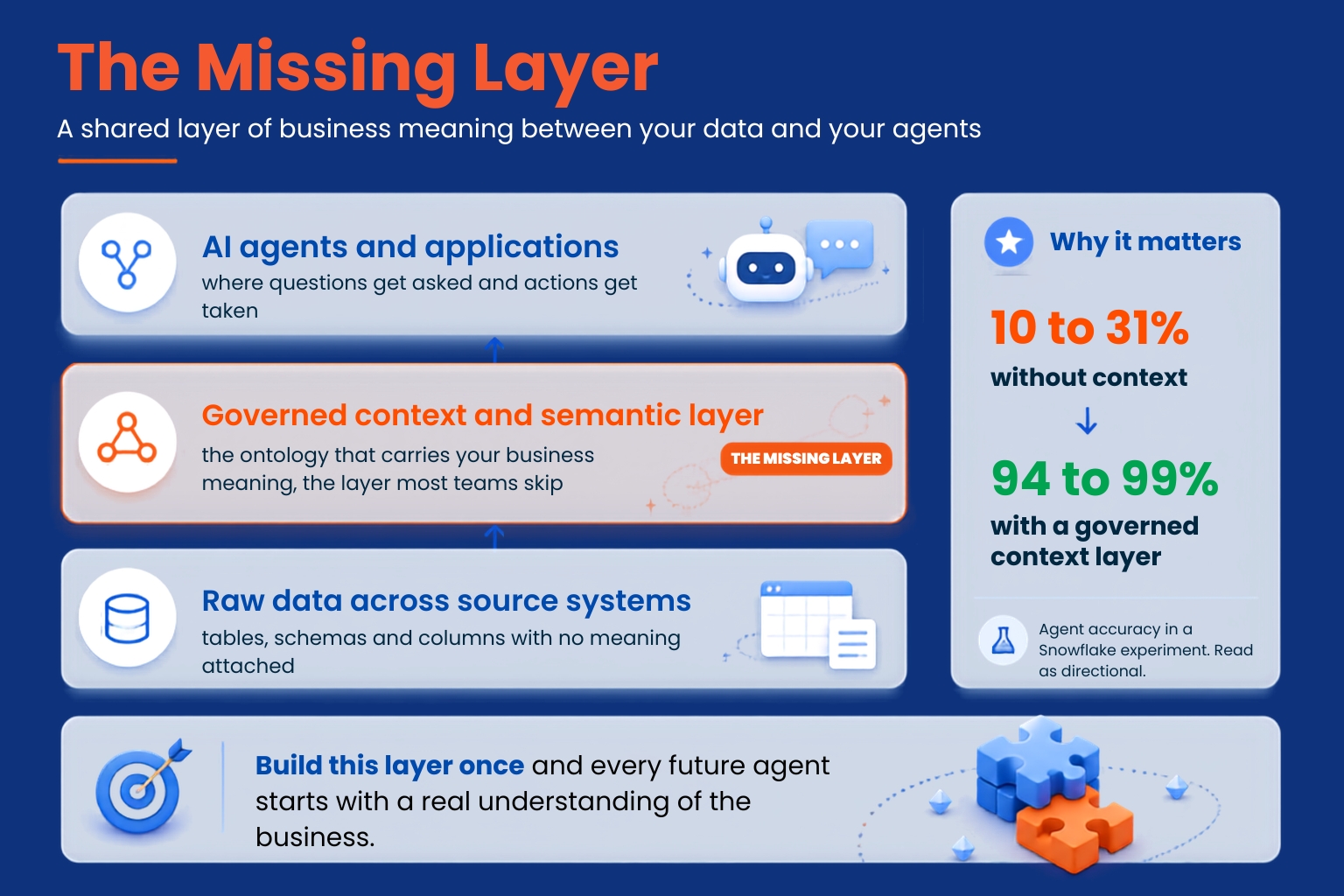
The Open Semantic Interchange specification reached its first full version in early 2026 with backing from Snowflake, dbt Labs, Salesforce, and more than thirty partners, and Microsoft added ontology support to Fabric. Shared business meaning is now becoming the standard infrastructure.
The semantic layer enables AI agents and applications to understand business context, generate more accurate SQL, retrieve relevant knowledge, and reason consistently across structured and unstructured data—turning enterprise data into machine-understandable, business-aware intelligence.
Understanding the business is only half the job
There is a second theme that ran through the Summit. Once an agent can understand your business, it can also act on it, and understanding without control quickly becomes a liability.
An agent acting on your data needs clear limits: what it can see, what it can decide on its own, and where a human signs off. You cannot govern an autonomous agent the way you governed a static model, because the risk now runs across a whole chain of decisions and actions taken at speed. Trust, traceability, and human oversight are what turn a clever pilot into something you can put into production.
How we approach this at Exponentia.ai
Our view is straightforward. Treat the business context as the real project. Once that foundation is in place, the model becomes the comparatively easy part.
In practice that means grounding agents in a governed layer of business meaning, built on the platforms our clients already run, so the context sits close to the data rather than bolted on afterwards. It means building the semantic foundation once and reusing it, so every future agent starts smarter than the last. And it means wrapping the whole thing in governance from the outset through propreity framework GenTrustTM, our framework for agent registry, evaluation, monitoring and retirement- so visibility, risk tiering, and human approval are designed in well before anything reaches production (add link to GenTrust page / video)
What stayed with me
What stayed with me from the Summit was how much the tone had shifted. Last year the buzz was about what these models could do. This year the conversation was about whether we can trust them with the business. The teams I met who were furthest ahead were quietly getting on with the patient, less glamorous work of giving their AI a real understanding of how their business processes run. That is where I would put my energy - get that foundation right, and the questions your board cares about, start getting answered.
If you were at the Summit too, I’d love to hear your perspective. What were your biggest takeaways?
https://www.linkedin.com/in/niyatisrivastava/
Sources:
- McKinsey, The State of AI 2025 (78 percent adoption; roughly 6 percent high performers; 39 percent enterprise EBIT impact), as reported at https://www.punku.ai/blog/state-of-ai-2024-enterprise-adoption
- MIT NANDA, The GenAI Divide: State of AI in Business 2025 (around 95 percent of pilots deliver no measurable P&L impact), via Fortune: https://fortune.com/2025/08/18/mit-report-95-percent-generative-ai-pilots-at-companies-failing-cfo/
- Gartner (more than 40 percent of agentic AI projects cancelled by end 2027), as reported at https://www.thedataexperts.us/writing/enterprise-ai-failure-crisis-95-percent-failure-rate.html
- Snowflake engineering experiment on context grounding accuracy (roughly 10 to 31 percent without context against 94 to 99 percent with it), reported by Atlan: https://atlan.com/know/context-layer-enterprise-ai/
- Share of enterprise data that is unstructured (around 90 percent) and Open Semantic Interchange v1.0 plus Microsoft Fabric ontology support, Oracle:
- Ontology as the semantic layer, nouns and verbs framing, EY: https://www.ey.com/en_us/insights/consumer-products/ontologies-as-the-missing-layer-in-enterprise-ai
- Ontologies for AI, accuracy and reliability impact, CIO: https://www.cio.com/article/4169618/the-next-enterprise-architecture-asset-ontologies-for-ai.html
- Semantic layer and the confidently wrong query example (cst_gds_sld), Fluree: https://flur.ee/fluree-blog/how-to-build-a-semantic-layer-for-enterprise-ai/
- Broader adoption, ROI, and data quality context, Fullview roundup: https://www.fullview.io/blog/ai-statistics and FullStack: https://www.fullstack.com/labs/resources/blog/generative-ai-roi-why-80-of-companies-see-no-results
Beyond AI Pilots: Why BFSI's Next Competitive Advantage Will Be Measured on the P&L
Artificial Intelligence has become a strategic priority across the banking, financial services, and insurance (BFSI) sector. Over the past few years, institutions have invested heavily in AI-powered fraud detection, intelligent document processing, customer service automation, credit risk assessment, and, more recently, Generative AI. Most organizations have moved beyond asking whether AI works, they've already seen its potential.
The question now is far more important, Can AI deliver measurable business outcomes?
This marks a significant shift in how enterprise leaders are evaluating AI investments. Early conversations focused on proof-of-concept projects and technical feasibility. Today, success is measured by business impact. Leadership teams want to know whether AI is accelerating customer onboarding, improving relationship manager productivity, reducing operational costs, strengthening compliance, and ultimately contributing to revenue growth. In other words, AI is no longer expected to prove its capabilities, it is expected to prove its value.
Yet this transition from pilot to production remains one of the biggest challenges facing the industry. Many financial institutions have multiple AI initiatives running across different functions, but relatively few have successfully embedded them into core business operations. The challenge is rarely the technology itself. More often, it lies in integrating AI into existing workflows, aligning business and technology teams, and ensuring that AI-driven decisions are trusted, governed, and scalable.
One of the biggest misconceptions surrounding enterprise AI is that better models automatically lead to better business outcomes. While technology teams naturally focus on model accuracy and performance, business leaders evaluate success differently. They ask practical questions, Has the time required to process a loan application decreased?
Are customer service teams resolving issues faster?
Are relationship managers spending more time with clients instead of searching for information?
Has operational efficiency improved without compromising regulatory compliance?
These are the metrics that ultimately matter because they directly influence the bottom line.
The BFSI industry is uniquely positioned to benefit from enterprise AI because it generates vast amounts of structured, high-value data through customer interactions, financial transactions, lending operations, and compliance processes. The opportunity is no longer about collecting more data. It is about transforming trusted data into faster, better decisions.
Customer onboarding illustrates this opportunity well. Although many institutions have digitized parts of the onboarding journey, customers often continue to experience delays caused by fragmented systems, manual verification, and multiple compliance checks. AI can help orchestrate these processes more intelligently by identifying bottlenecks, automating routine tasks, and supporting faster decision-making while maintaining regulatory standards. The result is a smoother customer experience, reduced operational costs, and quicker revenue realization.
Relationship management is undergoing a similar transformation. Financial advisors and relationship managers spend a significant portion of their time gathering customer information, reviewing portfolios, and navigating multiple systems before meaningful conversations can even begin. Generative AI has the potential to reduce this administrative burden by summarizing customer interactions, surfacing relevant insights, recommending next-best actions, and enabling more personalized engagement. Rather than replacing human expertise, AI enables professionals to focus on building stronger relationships and delivering greater value to customers.
However, technology alone is not enough. Scaling AI successfully requires trusted data foundations, strong governance, and close collaboration between business, operations, compliance, and technology teams. In a highly regulated industry, AI-generated recommendations must be transparent, explainable, and auditable. Whether AI is supporting fraud detection, credit decisions, or customer servicing, institutions must have confidence that recommendations are reliable and aligned with regulatory expectations.
Perhaps the biggest differentiator over the next few years will not be access to AI technology, those capabilities are becoming increasingly accessible. Competitive advantage will come from how quickly organizations can convert intelligence into action. In financial services, timing matters. A delayed onboarding process can result in customer attrition. Slow access to customer insights limits relationship managers' effectiveness. Operational teams that identify risks too late lose the opportunity to prevent them. Organizations that shorten the gap between insight and execution will be better positioned to improve customer experiences, increase operational efficiency, and strengthen financial performance.
As AI adoption matures, the industry's focus is naturally shifting away from experimentation toward execution. The organizations leading this transformation are not necessarily those launching the highest number of AI initiatives. They are the ones embedding AI into everyday business processes, aligning technology with measurable business objectives, and consistently delivering outcomes that matter to both customers and the business.
These are the conversations shaping the future of enterprise AI in financial services. To continue this dialogue, Exponentia.ai and Databricks are bringing together senior technology, data, and business leaders at the BFSI Leadership Forum: From Pilots to P&L, Delivering Measurable GenAI Outcomes on 29 July 2026 in Mumbai.
Designed as an invitation-only executive forum, the event will feature real-world customer stories, applied GenAI use cases, peer discussions, and practical insights into how leading BFSI organizations are translating AI investments into measurable business outcomes. For leaders looking to move beyond experimentation and build AI capabilities that create lasting enterprise value, it promises to be a timely and meaningful discussion.
Register Now











LLM's and the Mirage of Thinking Across Problem Complexity
We are living in a day and age where large language models (LLMs) can seamlessly mimic human thoughts and the boundary between genuine reasoning and sophisticated imitation has become increasingly blurred. As we interact with and refine these AI systems, we're forced to confront profound questions: Do these models truly 'think', or are they merely creating an illusion of thought through complex patterns?
The rise of Agentic AI further complicates our understanding, prompting us to reconsider our definitions of intelligence and autonomy. By examining the strengths and limitations of reasoning models through the intricate lens of problem complexity, we have looked to demystify how these systems operate, revealing not just the remarkable achievements of artificial intelligence, but also the critical gaps in our comprehension of its inner workings.
Subtle Patterns, Significant Questions
The challenges and limitations we’ve encountered internally have increasingly mirrored patterns emerging across the wider industry. While not always prominent, they often surfaced as small inconsistencies or subtle shifts in output. For instance, generating nearly identical responses for slightly different contractual clauses. Although minor at first, these patterns grew gradually and became difficult to ignore. They may signal early signs of context degradation, a process which we discuss in further detail later in the article, where the model appears to lose track of earlier details as the input sequence becomes more layered. These issues raise questions about how reliably the model can handle a diverse range of information.

In response, we began analysing when and how these shifts emerged, as well as what they suggest about the model’s ability to sustain reasoning under pressure. The discussion that follows presents our internal findings alongside insights from emerging research, which is beginning to uncover similar patterns.
Bigger Workloads Don’t Always Mean Better Results
A recent study by Apple [1] found that certain LLMs struggle with task prioritization. Instead of focusing on the most relevant parts of a given task, the models often treat every input equally, leading to inconsistent reasoning in more complex use cases. Taken together with our own industry experience, this highlights an important reality: we are still learning how LLMs behave across different scenarios and in doing so, uncovering both their strengths and their limitations.
Our deployments of Agentic AI across industries such as healthcare, manufacturing, legal services etc, have all confirmed this trend. Performance often declines as complexity increases and the volume of data scales up.
Let us consider contracts as an example. Traditionally, businesses have relied on manual processes to review individual contracts and their numerous clauses, which is a time-consuming and often error-prone task. However, by deploying AI Agents, which consist of multi-agent setups involving orchestrated LLMs with distinct responsibilities, organisations can automate this rigorous review process.

We actively help businesses implement agentic AI solutions, ensuring a smooth transition from manual review to automated, intelligent contract analysis. When implemented, these agents assess each contract against a predefined playbook, ensuring accuracy and compliance.
Memory Refresh and Task Segmentation
During our implementation, we found that the AI agent handled the review of 4–6 clauses with ease. However, when tasked with reviewing a larger volume of around 15–20 clauses, its accuracy declined noticeably. This drop in performance was accompanied by a loss of context, particularly when the model needed to recognize subtle variations in clauses expressed with different wording styles.
To address this issue, we explored a strategy of memory refreshing, periodically resetting the model by clearing its memory and reintroducing key information in a simplified format. This approach loosely parallels techniques such as retrieval-augmented generation (RAG) or sliding windows, which are designed to manage memory and maintain relevance over extended tasks.

For example, in contract review, resetting after every 5 clauses and feeding the model concise summaries of the most recent ones proved effective. This light reset reduced the cognitive burden on the model and helped it sustain accuracy across longer, more repetitive documents particularly in cases where small differences in wording carried significant meaning.
Beyond accuracy, we also observed an even subtler limitation: the model’s ability to retain and differentiate information across extended inputs. This became especially evident when reviewing clauses with overlapping language, where the AI sometimes blurred distinctions between similar but functionally different provisions.
Over time, we noticed that the model often lost clarity about what it had already processed. It sometimes blended earlier inputs with later ones or produced repetitive outputs. This became particularly evident when outputs needed to capture small but important distinctions, for example, two clauses serving different legal functions but written in similar language.
This pattern reflects what James Howard [2] describes as “Context Degradation Syndrome.” In his study, he explains how models can gradually lose track of the original “plot” as the input sequence extends, leading to a decline in both relevance and precision.
Building A Multi-Agent Workflow
As with previous cases, light memory refresh techniques such as, reintroducing summaries at regular intervals can help optimize the model during longer tasks, as the study also noted. However, in situations with very high information density, we found that more structured approaches were often more effective.
One approach we explored was breaking down contracts by assigning specific ranges of clauses to individual agents, rather than giving a single agent responsibility for the entire document. For instance, clauses might be divided into batches of 1 to 4, 5 to 10, and so on, with each agent focusing only on its assigned section. This method reduced the context burden and helped preserve both clarity and consistency while still aligning with the playbook.

Interestingly, this approach reflects the research of Zhang et al. [3], who proposed the chain-of-agents framework. Their method assigns each agent a specific function, such as planning, verifying, or summarising and the outputs are passed between agents in a structured workflow. By isolating responsibilities and breaking down large tasks, the system was better equipped at managing complexity.
A case study by Evgeni Rusev [4], also demonstrated the value of this approach. In his example, a multi-agent setup streamlined complex document workflows by using an orchestrator agent to delegate tasks. For instance, one agent handled employment-related clauses while others managed compliance checks.
This type of workflow has the potential to reduce document review time by up to 80% without sacrificing accuracy. It underscores the value of distributing responsibility across specialised agents, a direction that may prove critical as we rethink how to build scalable, reliable AI systems.
Powering LLMs Through Structured Environments
As LLMs continue to evolve and integrate deeper into workflows, we’ve found that performance improvements may not solely rely on scaling but also on the environments we build around them. Based on our observations, even subtle design shifts may offer more stability when navigating complex, high-stakes scenarios. Across the industry, we’re seeing momentum build toward more capable, smarter models.
Rather than solving complexity through scale alone, the future may lie in how precisely we shape these systems to reason more clearly and how closely we examine the finer details of how they operate.
References
1. Howard, J. (2024). Context Degradation Syndrome: When Large Language Models Lose the Plot. Retrieved from https://jameshoward.us/2024/11/26/context-degradation-syndrome-when-large-language-models-lose-the-plot
2. https://arxiv.org/abs/2406.02818? Chain of Agents: Large Language Models Collaborating on Long-Context Tasks
3. https://www.businessinsider.com/big-law-top-10-firms-ai-overhaul-use-cases-2025-7?
4. Evgeni Rusev, [4] https://medium.com/%40evgeni.n.rusev/multi-agent-ai-with-hybrid-search-cutting-document-review-time-by-80-f7367a9b1361
5. https://machinelearning.apple.com/research/illusion-of-thinking


Join Us at AWS Summit London: Connect, Collaborate, and Discover
Are you heading to the AWS Summit London on 30th April? Meet us there! We invite you to connect with us to discuss all things Data and AI.
The AWS Summit London is where the latest in cloud innovation by Amazon comes to life. It is a fantastic opportunity to network with industry professionals and learn how cutting-edge technologies, from generative AI to serverless computing, are revolutionising industries. Join us to connect with like-minded individuals and expand your professional network.
Who Are We?
We specialise in Data and AI consulting, enabling businesses to accelerate data to actions with AI, we combine our deep industry expertise with innovative technologies to deliver tailored solutions that drive smarter decisions, optimise operations, and unlock sustainable growth.
We Are An Advanced Tier Partner
As an AWS Advanced Tier Partner, we have greater collaboration with AWS, access to their exclusive partner resources and support network for the benefit of our customers. This means we deliver even more tailored, high-impact solutions for businesses looking to maximise their cloud investments.
What We Bring To The Summit
Procurement Spend Analytics (PSA)
PSA is our GenAI-powered accelerator that processes procurement data, categorises spending, and uncovers opportunities for cost savings, so you can ensure compliance effortlessly.
Are you looking to enhance your organisation’s procurement setup with AI? Reach out to us!
AIXponent
Our AIXponent Accelerator is built on Bedrock. AIXponent is an AI Business Analyst for your enterprise. Unlock valuable insights from your organisation's knowledge base. We offer a comprehensive suite of tools and services designed to help enterprises harness the power of large language models, retrieval augmented generation, and cognitive services, all within a scalable and secure environment.
You can find AIXponent on the AWS Marketplace here
Data Path
Simplify your backend development by generating standardised scaffolding, like Lambda and Python functions, allowing your team to focus on core business logic. By significantly reducing DevOps effort, you can accelerate setup and maintain consistency across your projects. Ready to streamline your development process? Contact us today
Service Launch
Build foundational ETL pipelines that are complete with folder structures, repositories, and basic code, to streamline your infrastructure setup. While it simplifies the initial process, custom logic and data quality steps remain essential, ensuring your data engineering tasks are effectively managed.
Come Meet Us
Our leadership team will be at the event to share insights and discuss everything Data and AI. We’re eager to hear your thoughts and explore potential collaborations. Let's discuss how we can help you leverage Data and AI through our expertise to transform your business. We’re excited to share our perspectives on how these technologies can empower your organisation.
Where to Find Us?
Keep an eye out for our team members at the event. Reach out to us at connect@exponentia.ai so that we can schedule a quick catchup at the summit.
We’d love to meet you and discuss how we can support your journey in leveraging Data and AI for your business.
Event Details
Where: Excel | London, UK
When: Wednesday, 30 April 2025
We look forward to connecting with you at the AWS Summit London!


We're a British Data Awards 2025 Finalist
We’re excited to announce that Exponentia.ai has been nameda Finalist in the British Data Awards 2025!
The BritishData Awards is an annual quest to discover and celebrate the UK’s datasuccess stories. Organisations taking part this year range from FTSE 100 heavyweights, public sector innovators, technology unicorns, fast-growing scale-ups, critical Not-For-Profits, and everything in between.
The British Data Awards 2025 will announce Winners acrosssome 29 categories and several Runner-Up awards will also be presented.
A record 448 entries were received for the fifth edition of the British Data Awards which means that competition to be named a Finalist proved to be exceptionally strong, so we’re especially pleased to be announced as a Finalist.
For our second year in a row as Finalists, we have been recognised for our immense impact, this time in the Data Management Solution of the Year category. This highlights our commitment to transforming how businesses harness data to drive efficiency, intelligence, and gain a competitive advantage.
Sanjay Kumar, our Chief Data & AI Officer at Exponentia.ai, shared his thoughts on this achievement: “Being named a Finalist in the British Data Awards for the second consecutive year is an incredible achievement and a proud moment for all of us at Exponentia.ai. This recognitionis a direct reflection of our team’s hard work, dedication, and passion for pushing the boundaries of data and AI to provide immense value to our customers across the globe. We’re excited for what’s ahead and are looking forward to bringing home the win this year!”
Jason Johnson, Co-Founder of Predatech and British Data Awards judgesaid: “Judging so many excellent entries really is a huge challenge but also an enormous privilege. Every organisation named a Finalist this year should be exceptionally proud of this achievement. By sharing your data success stories with us, you’re also helping to showcase the strength and vibrancy of the UK’sdata ecosystem, and I can’t wait to celebrate your achievements on the 14th of May.”
Finalists will be celebrated, and Winners will be announced, at an awards ceremony taking place on the 14th of May in the heart of London.





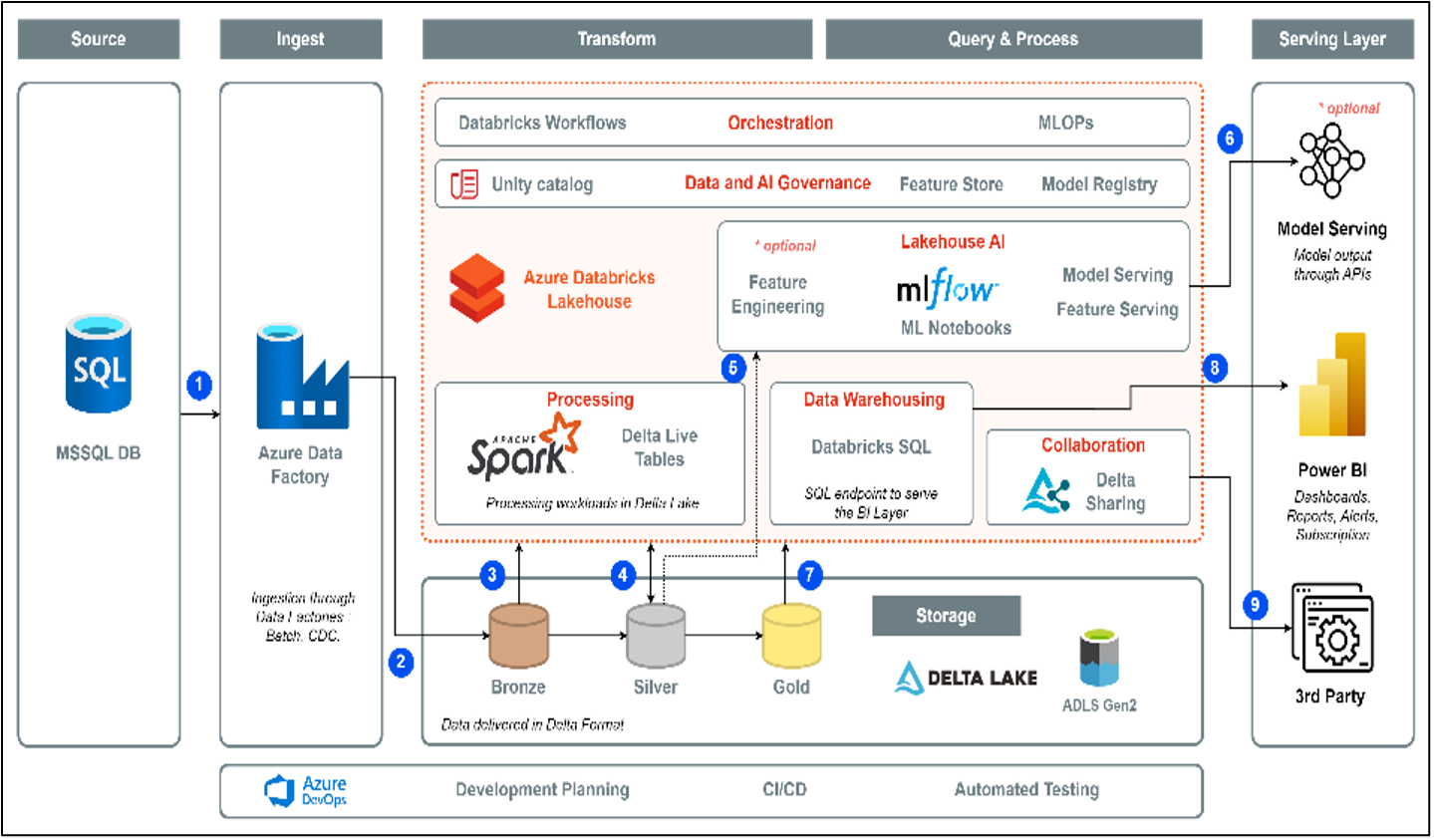

AI Reality for Business Impact: Turning Data & AI into Real Enterprise Outcomes
AI has moved far beyond hype. It is now influencing how enterprises make decisions, streamline operations, and compete globally. Yet despite rapid adoption, most organizations still face the same challenge:
How do we convert AI ambition into measurable business impact?
This is the core focus of AI Reality for Business Impact, an exclusive evening hosted by Exponentia.ai and Qlik in Mumbai this December. The event brings together industry leaders, data practitioners, and transformation champions to explore how modern enterprises can translate innovation into outcomes that matter.
From AI Experiments to Enterprise Execution
In recent years, companies have embraced GenAI pilots, automating reports, summarizing documents, experimenting with copilots, and testing new workflows. But pilots alone don’t move organizations forward.
The next phase of AI maturity requires platforms, governance, and real-world integration.
The event will explore this shift, focusing on how enterprises are operationalizing AI through robust data ecosystems, future-ready analytics, and trusted governance frameworks. The conversation isn’t about what AI can do, it’s about how to deploy it responsibly and repeatedly across business functions.
The Evolution of Analytics in the Age of AI
Today’s businesses operate at a speed that traditional analytics cannot keep up with. Leaders need insights that are continuous, contextual, and actionable, not static dashboards.
This is where next-generation platforms like Qlik Sense Cloud come in.
During the event, participants will see how features like Dataflows, Data Marketplace, Predict/Answers, and emerging agentic capabilities are enabling a new level of decision intelligence.
Analytics is evolving from reporting to real-time guidance, helping teams move from data to action instantly.
Data Foundations: The Unsung Hero of AI Transformation
AI systems are only as powerful as the data that fuels them.
For many enterprises, fragmented data, inconsistent pipelines, and unclear lineage limit the true potential of AI.
The keynote on Qlik Talend Cloud will highlight why clean, governed, and unified data architectures are the backbone of successful AI adoption. From the Iceberg open lakehouse to automated pipelines, data quality, and the AI TrustScore framework, the session focuses on the critical layer most enterprises overlook- trusted data.
Learning Through Real Enterprise Stories
The evening also includes a customer-led transformation story, offering a practical, unfiltered look into the challenges, breakthroughs, and measurable gains achieved through modern data and AI integration.
Hearing real journeys helps decode what truly drives success beyond technology itself.
Following the customer story, the evening will also feature a panel discussion titled “From Descriptive to Agentic: The Evolution of Analytics in the Enterprise.”
This conversation brings industry leaders together to reflect on how analytics has progressed from dashboards to dynamic, autonomous, agent-driven intelligence, and what this shift really means for enterprise teams. The panel will unpack practical challenges, lessons from the field, and the realities of making AI work at scale, not just in isolated experiments.
A Space for Conversations That Shape the Future
Beyond sessions and demos, the event creates an environment for leaders to exchange ideas, discuss emerging trends, and explore how AI can fuel their own transformation. It is an opportunity to step away from day-to-day operations and rethink what’s possible when intelligence is embedded throughout the enterprise.
AI Reality for Business Impact is more than a technology event.
It's an invitation to reimagine how decisions are made, how intelligence flows through organizations, and how AI can deliver meaningful, measurable value.
Exponentia.ai and Qlik look forward to hosting you for an evening of insight, innovation, and impact, and to helping you chart the next chapter of your enterprise AI journey.
Register Now

Exponentia.ai Recognized by Databricks as a Leading Innovator in GenAI and Agentic AI
We are proud to announce that Exponentia.ai has been exclusively recognized by Databricks across three of the four most critical segments driving AI transformation:
- Cross-Industry GenAI Use Cases
- Cross-Industry GenAI Validation Frameworks
- Foundational Agentic AI Systems
This acknowledgment positions Exponentia.ai among a select group of global innovators shaping the future of Generative AI, Agentic AI, and LLMOps on the Databricks Data Intelligence Platform.

Why This Matters
Databricks’ recognition highlights our ability to deliver enterprise-ready AI solutions that combine governed data architectures, robust validation pipelines, and low-latency consumption patterns. These capabilities enable organizations to confidently deploy GenAI applications and agentic systems that are scalable, secure, and transformative.
Our Role in the Databricks Ecosystem
As part of the Databricks Partner Network, Exponentia.ai is driving innovation through:
- Cross-Industry GenAI Accelerators that streamline adoption across diverse business domains
- Validation Frameworks ensuring compliance, reliability, and trust in AI deployments
- Agentic AI Systems that enable autonomous decision-making and advanced orchestration
This recognition validates our commitment to helping enterprises unlock the full potential of AI through Lakehouse architecture and Brickbuilder-certified solutions.
What’s Next
Our roadmap is stronger than ever. In the coming months, we will:
- Launch two new GenAI accelerators on the Databricks Brickbuilder platform
- Introduce a new Lakehouse solution designed to accelerate AI-driven insights and operational efficiency
Explore More
Read the press release here: Exponentia.ai Secures Exclusive Recognition from Databricks
Read the official Databricks announcement here:
https://www.databricks.com/blog/introducing-databricks-cross-industry-partner-accelerators-agentic-…
Exponentia.ai is proud to be at the forefront of AI innovation. Together with Databricks, we are shaping the future of data intelligence.

Building the Future: Agentic AI and Autonomous Systems
The idea of intelligent agents that can think, act, and learn on our behalf once belonged to the world of science fiction. Today, it is rapidly becoming an enterprise reality. Agentic AI and autonomous systems are now capable of handling complex multi-step workflows, integrating with enterprise tools, and making contextual decisions, freeing people to focus on higher-value judgment and innovation.
But unlocking this potential isn’t just a technological challenge; it’s an organizational one. As enterprises move beyond experimentation, they need structure, governance, and repeatable frameworks to scale AI responsibly. This is why so many companies are now investing in GenAI Centers of Excellence (CoEs) to turn early pilots into enterprise-wide transformation.
Analysts forecast exponential growth ahead.The global market for agentic AI, still in its infancy, is projected to reach tens of billions of dollars within the decade. Multi-agent architectures, adaptive learning systems, and autonomous workflows are all driving a wave of enterprise automation unlike anything we’ve seen before. The momentum is undeniable, and the organizations that act today will define the next generation of intelligent enterprises.
What Agentic AI Really Means for Enterprises
Agentic AI refers to systems that understand goals, plan steps, take autonomous action, and improve through feedback. Unlike traditional AI models that simply return an output, agentic systems can connect to APIs, orchestrate tools, analyze data, make decisions, and collaborate with humans to complete end-to-end processes.
Imagine an insurance claims workflow where anAI agent reviews the claim, extracts details, checks policy conditions, requests missing documents, and prepares a resolution, long before a human reviewer steps in. In IT operations, autonomous agents can diagnose incidents, run automated fixes, and document solutions in real time.
These agents represent more than just automation. They signal a shift toward systems that can reason, adapt, and execute with increasing sophistication. However, for enterprises to adopt them confidently, these systems must remain trustworthy, explainable, secure, and compliant.
Why a GenAI Center of Excellence (CoE) Matters
Enterprises that experiment with agentic AI in silos often face two major risks, fragmented innovation and unmanaged exposure. Without coordinated governance, AI models can behave unpredictably.Without shared frameworks, teams reinvent the wheel repeatedly, slowing down adoption.
A GenAI CoE offers a centralized engine for scaling AI responsibly. It provides the architecture, standards, and governance required to innovate at speed, while maintaining control.
A mature CoE typically focuses on three foundational pillars:
- Architecture: Designing how agents integrate with enterprise systems, data, and security layers.
- Governance: Creating policies on data privacy, bias testing, validation, and human oversight.
- Enablement: Training teams, building reusable components, and measuring business impact.
This structured approach ensures consistency, prevents vendor lock-in, and aligns innovation with enterprise value.
Where Agentic AI Is Already Making an Impact
- Agentic AI is already transforming multiple sectors:
- Banking & Financial Services: Autonomous agents analyze transactions, detect anomalies, support relationship managers, and assist with compliance workflows.
- Manufacturing: Agents monitor equipment health, optimize production schedules, and coordinate supply chain adjustments in real time.
- Retail & CPG: AI agents manage dynamic pricing, run promotions, and forecast demand fluctuations with greater accuracy.
- Pharma & Healthcare: Agents streamline documentation, automate trial reporting, and support regulatory submissions with improved traceability.
Organizations adopting agentic systems are reporting 30–40% improvements in process efficiency, reduced operational costs, and faster turnaround times on complex workflows.
But with great capability comes greater responsibility. These systems must remain explainable, secure, and adaptable, something only a governance-led framework can ensure.
Challenges on the Road to Autonomy
Scaling agentic AI introduces new challenges, including:
- Unclear ownership: Determining who governs decisions made autonomously.
- Data fragmentation: Agents require unified, governed access to data, not scattered silos.
- Bias and explainability: Autonomous decisions must be transparent and equitable.
- Operational readiness: Moving from pilot to production requires continuous monitoring, retraining, and observability.
Addressing these hurdles demands more than advanced models, it requires an organizational blueprint. A GenAI CoE delivers exactly that.
From Single Agents to Multi-Agent Ecosystems
The next evolution of enterprise AI will involve multiple specialized agents collaborating to solve broader, dynamic problems. These multi-agent ecosystems will negotiate tasks, adapt autonomously, and coordinate workflows across functions.
Building AI That Works Responsibly
At Exponentia.ai, we believe the future lies in balanced innovation, where autonomy is paired with strong oversight and measurable outcomes. Through our GenAI Center of Excellence, we help enterprises build agentic systems that are trustworthy, explainable, and aligned with business intent.
From governance models to orchestration layers, our approach ensures that AI isn’t just powerful, it’s responsible.
Join us for our upcoming webinar, “Building the Future: Agentic AI and Autonomous Systems,” where we will unpack architecture patterns, governance frameworks, and real-world adoption stories that show how enterprises can move from experimentation to transformation.
Date: Thursday, November 27
Time: 2:30–3:15 PM IST; 1:00-1:45PM GST; 9:00-9:45 GMT
Speaker: Chalapathi Rao Komirisetti, CoE Lead-GenAI, Exponentia.ai
Register here: Go To Webinar

AI Reality Tour Dubai 2025: Turning Data Strategy into Real-World Impact
As the world moves from AI experimentation to AI execution, enterprises are racing to close the gap between ambition and action. The Qlik AI Reality Tour, Dubai, happening on 29 October 2025 at the One&Only Royal Mirage, brings that transformation to life, showing how organizations can finally turn data-driven strategies into measurable, trusted business outcomes.
The event will gather leaders from across industries to explore one critical theme, how to do data differently with intelligence embedded where decisions are made, and with the speed, trust, and scale modern enterprises demand. From reimagining cloud migration and open architectures to supercharging analytics with predictive AI, the discussions will focus on what it takes to convert potential into performance.
As a Silver Sponsor, Exponentia.ai is proud to partner with Qlik in this transformative journey. Together, we share a common vision, enabling enterprises to accelerate their digital transformation by aligning data, analytics, and AI into one cohesive, value-driven ecosystem.
The Future of Intelligent Decision-Making
The Qlik AI Reality Tour is not just another conference, it’s a deep dive into the future of data intelligence. Attendees will gain practical insights into how next-generation tools and frameworks are bridging the divide between AI strategy and execution.
Discussions throughout the day will explore how Qlik’s evolving ecosystem, from agentic experiences to open lakehouse architectures, empowers enterprises to integrate intelligence directly into their workflows. Participants will also hear how organizations are using predictive AI to move from descriptive to prescriptive analytics, enabling faster, more confident decisions across business functions.
These sessions go beyond technology. They reveal how culture, governance, and trust combine to create a sustainable foundation for enterprise AI adoption. Whether you’re modernizing your data architecture, migrating to the cloud, or scaling AI use cases, the event promises actionable insights to help you move from “Can we do that?” to “We did that.”
For Exponentia.ai, this event represents more than sponsorship, it’s a continuation of our mission to help enterprises achieve intelligent transformation. Through our deep expertise in data integration, analytics modernization, and AI-driven decision systems, we empower organizations to turn strategy into action.
Our Qlik Center of Excellence (CoE) exemplifies this commitment. Built in collaboration with Qlik, it enables enterprises to leverage advanced analytics, data governance, and AI capabilities with confidence. From BFSI to manufacturing and CPG, our solutions help global clients unlock faster time-to-insight and drive measurable ROI.
By embedding AI within decision points, not just at the edge of operations, we help organizations bridge the gap between information and impact. At the AI Reality Tour, our experts will be on-site to showcase how “doing data differently” leads to smarter, faster, and more trusted business outcomes.
See You in Dubai!
The future of data and AI is not about isolated systems or experimental tools, it’s about connected intelligence that empowers every decision. The AI Reality Tour – Dubai is where that future takes shape, and Exponentia.ai is proud to be part of it.
Dubai Date: 29 October 2025
Venue: One&Only Royal Mirage, Dubai
Register Now
We look forward to connecting with you in Dubai, and exploring how together, we can turn AI’s potential into enterprise performance.








From Raw Data to Strategic AI: Driving Enterprise Value with Qlik and Exponentia.ai's Qlik Center of Excellence
In the race to become truly data-driven, many enterprises are still grappling with a fundamental challenge: how to transform raw, siloed data into actionable intelligence that drives real business value. While the tools and platforms to manage data are growing in number and complexity, the gap between data access and strategic decision-making remains persistent.
That’s where Qlik Cloud, combined with Exponentia.ai’s Qlik Center of Excellence (CoE), is redefining the roadmap for modern enterprise analytics. This strategic collaboration is helping organizations move beyond fragmented reporting systems toward integrated, intelligent decision frameworks, powered by real-time data, business context, and AI.
Bridging Data Integration and Intelligence in One Platform
For decades, enterprises have struggled with disjointed analytics stacks: ETL tools, BI platforms, dashboards, and, more recently, AI models working in parallel but rarely in harmony. Qlik Cloud simplifies this landscape with a unified approach. Its end-to-end capabilities across data integration, analytics, and AI allow for smoother, governed workflows where data flows seamlessly from source to strategy.
This seamless integration is especially crucial in today’s volatile market conditions, where decisions can’t wait for batch-processed reports or weekly dashboards. Businesses require platforms that ingest, transform, analyze, and act on data in real-time, and Qlik Cloud delivers on that promise with robust data pipelines, real-time analytics, and embedded AI.
Unlocking Strategic Value with Exponentia.ai’s Qlik CoE
While the platform is powerful, true transformation comes from how it’s implemented, customized, and scaled across an organization. That’s where Exponentia.ai’s Qlik Center of Excellence steps in.
Our CoE is not just a support function, it’s a strategic enabler. It blends domain expertise, Qlik engineering capabilities, and a deep understanding of AI to help enterprises unlock the full potential of the Qlik ecosystem. By aligning Qlik’s native features with specific business goals, be it optimizing supply chain operations, improving customer segmentation, or enabling faster financial closes, we empower organizations to create tailored, scalable, and high-impact analytics journeys.
The result? A streamlined path from raw data to contextual, strategic insight, with clear ROI at every stage.
Democratizing AI: No Code, All Impact
One of the most transformational aspects of Qlik Cloud is its ability to democratize AI. With embedded predictive analytics and intuitive tools that require little to no coding, it empowers business users, not just data scientists, to participate in advanced analytics and forecasting.
This means marketing teams can run churn prediction models without writing a line of code. Sales managers can automate pipeline forecasting. Operations leaders can optimize inventory based on real-time trends. And with our CoE’s support, these tools are deployed responsibly, with governance, guardrails, and business relevance built in.
In short, AI is no longer locked in labs. It’s in the hands of the people who drive your business every day.
Embedded Intelligence for Real-Time Decisions
Modern enterprises operate in dynamic environments. Whether it’s responding to customer behavior shifts, managing supply chain disruptions, or navigating compliance requirements, the speed of decision-making is often the difference between leading and lagging.
Qlik’s associative engine, coupled with AI-powered insight generation, allows users to see not just what’s happening, but why. And with embedded analytics across workflows and applications, decisions can now be made at the point of impact, not hours or days later.
Through Exponentia.ai’s implementation frameworks, these insights are contextualized to industry nuances, whether you're in BFSI, retail, pharma, or manufacturing, ensuring every decision is data-backed, timely, and aligned with business goals.
ROI That Speaks the Language of Business
Analytics investments are under scrutiny like never before. Business leaders want proof, not just of adoption, but of impact. That’s why Exponentia.ai’s Qlik CoE places strong emphasis on outcome-based analytics. Our clients have reported measurable benefits, such as:
- Reduced operational costs through automated reporting
- Increased revenue through AI-driven targeting
- Improved compliance and governance via unified data views
- Faster time-to-decision, translating into tangible business agility
These aren’t just efficiency metrics, they’re bottom-line gains that position analytics not as a cost center, but as a value generator.
Why This Matters Now
We are at a pivotal moment. As generative AI reshapes how enterprises think about automation and augmentation, the need for trusted, scalable, and business-centric data ecosystems has never been greater.
Qlik Cloud provides the architecture. Exponentia.ai’s Qlik CoE provides the execution excellence.
Together, they offer a blueprint for enterprises looking to accelerate their data-to-AI transformation, build a culture of decision intelligence, and gain a sustainable competitive edge in a fast-changing world.
Want to See It in Action?
Join us for Webinar #1 of our enterprise series - Powering Your Future with AI:
“From Raw Data to Strategic AI: Driving Enterprise Value with Qlik and Exponentia.ai's Qlik Center of Excellence”
Our experts will showcase how enterprises can:
- Build a modern analytics foundation with Qlik Cloud
- Deploy AI responsibly and at scale
- Translate insights into strategic advantage
Register Now
Let’s reimagine what your data can do—for today and for what’s next.

From Lag to Lead: How Change Data Capture Powers Real-Time Fraud Detection, Compliance & Customer Intelligence in BFSI
As financial institutions race to outsmart fraud, meet tightening regulations, and deliver hyper-personalized services, the ability to act on data in real time has become mission-critical. Lag is no longer just a performance issue — it’s a risk to revenue, reputation, and regulatory standing.
This is where Change Data Capture (CDC) is emerging as a game-changer. By enabling organizations to continuously monitor and replicate only the changes made to data across systems, CDC provides the agility needed to transition from reactive operations to real-time intelligence.
In this article, we’ll explore how leading technologies like Qlik Replicate, MicrosoftFabric, and Databricks are enabling BFSI organizations to harness CDC for real-time fraud detection, regulatory compliance, and customer intelligence —setting the stage for the upcoming webinar, “From Lag to Lead: How CDCPowers Real-Time Fraud Detection, Compliance & Customer Intelligence.”
1. Qlik Replicate: Real-Time CDC forLegacy-Heavy BFSI Ecosystems
Qlik Replicate has established itself as a frontrunner in enterprise-grade CDC by offering agentless, log-based data capture — an architecture that minimizes system load while ensuring ultra-low latency replication.
In the BFSI space, where data sprawls across SAP systems, IBM DB2 databases, main frames, and cloud-native platforms, this becomes a crucial enabler of interoperability.Qlik Replicate supports seamless data movement across these disparate systems in real time.
Key Benefits for BFSI:
· FraudDetection: Real-time ingestion of transactional data enables banks to deployAI/ML models that flag anomalous behavior the moment it happens.
· RegulatoryCompliance: CDC helps meet strict reporting timelines by ensuring that data flowing into compliance dashboards is always up to date.
· SchemaEvolution: Frequent schema changes — common in dynamic financial systems — are automatically captured and propagated without manual intervention.
· Customer360: With real-time data stitched together from CRM, core banking, and payment systems, BFSI firms can build a truly holistic view of customer journeys.
2. Microsoft Fabric: Democratizing CDC withLow-Code Pipelines
MicrosoftFabric introduces a modern, unified data platform where Data Pipelines and CopyJobs bring CDC capabilities to both technical and non-technical teams.
ThroughFabric’s low-code/no-code experience, BFSI organizations can build real-time dataflows that support:
· Incremental ingestion of customer, transaction, and risk data
· Data transformation on-the-fly
· Event-driven architecture for compliance alerting and fraud triggers
By enabling real-time change tracking via built-in connectors and transformation layers,Fabric drastically reduces the time to deploy CDC workflows — especially critical for large financial institutions where time-to-market is often a bottleneck.
Noteworthy Features:
· Governed Workspaces: Ensure secure, role-based access to sensitive financial data.
· Copy Jobs: Efficiently move only the changed data, reducing infrastructure costs.
· Interoperability:Works seamlessly with tools like Power BI, Azure Synapse, and Microsoft Purview for lineage tracking and compliance.
3. Databricks: Scaling CDC with Delta LiveTables
For BFSI institutions managing petabyte-scale data across high-throughput systems like trading platforms, core banking, and credit engines, Delta Live Tables (DLT) on Databricks offers a declarative, resilient, and scalable framework to operationalize Change Data Capture (CDC) in realtime.
Built on the Lakehouse architecture, DLT enables the creation of automated CDC pipelines that combine streaming ingestion, incremental processing, and governed data delivery—all within a single platform.
How Databricks Empowers BFSI:
· ScalableCDC Pipelines: Ingest and transform high-frequency change logs from transactional systems in real-time.
· Compliance-ReadyWorkflows: Maintain audit trails, versioned datasets, and lineage metadata crucial for regulatory audits.
· AI/MLIntegration: Feed continuously updated data into ML models for fraud scoring, churn prediction, and credit risk analytics.
· UnifiedGovernance: Through Unity Catalog, ensure consistent security and access policies across real-time and historical data.
The Strategic Payoff: Real-Time BFSI with CDC
The convergence of real-time CDC technology with modern data platforms is fundamentally transforming BFSI operations from lag-driven batch reporting to proactive intelligence. Institutions can now:
· Detect and respond to fraud as it unfolds
· Deliver accurate, near-instant compliance reporting
· Understand and anticipate customer needs at a micro level
· Reduce operational costs through leaner data pipelines and automation
How Exponentia.ai Can Help
With deep expertise in modern data architecture, real-time analytics, and AI integration, Exponentia.ai has been instrumental in helping leading BFSI organizations harness the full potential of CDC technologies. From architecting scalable pipelines on Qlik Replicate, Microsoft Fabric, and Databricks, to enabling real-time fraud detection, regulatory reporting, and customer intelligence frameworks — Exponentia.ai bridges the gap between strategy and execution.
Join the Conversation
Our upcoming webinar, “From Lag to Lead: How CDC Powers Real-TimeFraud Detection, Compliance & Customer Intelligence,” will feature live demonstrations, expert perspectives, and implementation insights into how Qlik, Microsoft Fabric, and Databricks are powering this transformation in BFSI.
Watch the webinar here: Go To Webinar
Date: July 3, 2025
Time: 1:30 PM – 2:15 PM IST | 12 PM to 12:45 PM GST
Don’t miss this opportunity to learn how tomove from data lag to real-time leadership.

Accelerating Time-to-Insight: The New Frontier of Data Mesh on Lakehouse Architecture
As enterprises strive to become more data-driven, the need for agile, secure, and scalable architectures has become paramount. Centralized platforms often struggle with rigidity and manual overhead, limiting speed and consistency in data operations. The Databricks Lakehouse architecture, enhanced by a metadata-driven orchestration framework, offers a modern, unified foundation, empowering organizations to rapidly operationalize data at scale while ensuring maintainability, governance, and automation.
At the core of this solution is Databricks, a unified data and AI platform that synergizes the strengths of data lakes and data warehouses. By supporting open data formats, scalable compute, native ML/AI integration, and unified governance through Unity Catalog, Databricks eliminates data silos and accelerates time-to-insight. The Lakehouse accelerator builds on these strengths by adding a reusable, extensible orchestration layer that simplifies and standardizes every stage of the pipeline—from raw ingestion to curated outputs.
The Time Barrier: Why Organizations Struggle
Despite the promise of Lakehouse and data mesh, many enterprises face long implementation cycles, fragmented tooling, and security concerns. Setting up an enterprise-ready mesh architecture often takes months, requiring extensive engineering, governance setup, and integration. For business leaders under pressure to deliver fast ROI and analytics value, this long runway is a major blocker.
That’s where Exponentia.ai’s Data Mesh on Lakehouse Accelerator comes into play!
At Exponentia.ai, we’ve combined our deep expertise in data engineering and AI with the power of Databricks Lakehouse to develop a metadata-driven accelerator that enables organizations to set up a secure and scalable data mesh in just two weeks.
Introducing Metadata-Driven Orchestration: The Core of the Accelerator
The metadata-driven orchestration framework is a foundational engine that drives automation, standardization, and adaptability across data ingestion and transformation workflows. Designed with reusability and modularity at its core, this framework provides the following advantages:
- Configurable and Extendable: Pipelines and transformations are driven by metadata, allowing teams to modify, extend, or replicate logic without touching code.
- Data Source Agnostic: Supports ingestion from databases, Delta Lake, REST APIs, flat files, XML, and JSON—without persisting sensitive credentials in metadata.
- Delta and Full Load Support: Handles both incremental and full ingestion patterns with automated change tracking.
- Re-run and Retry Logic: Built-in error handling and automated retries minimize operational disruptions.
- No Manual Patching: Pipeline logic dynamically adjusts to changes in schema or metadata—eliminating the need for manual intervention.
- Lineage and Governance: Maintains column- and table-level lineage, supporting compliance and governance through Unity Catalog.
- On-Demand Pipeline Management: Activate, pause, or modify pipelines dynamically based on operational needs.
This accelerator is designed for speed without compromise. It abstracts complexity using metadata orchestration and reusable patterns, so your data teams can:
- Rapidly onboard new domains and pipelines
- Enforce security and access controls across domains
- Standardize schema evolution, lineage, and cataloging
- Enable decentralized yet governed data product creation
Backed by our Center of Excellence (CoE) and strategic partnership with Databricks, this accelerator reduces implementation time from months to days—dramatically improving time-to-insight and enabling quicker adoption of self-serve analytics.
Why This Matters: Market Urgency and Competitive Edge
According to a 2024 Forrester report, enterprises that operationalize decentralized data platforms (like data mesh) report up to 40% faster delivery of insights, and 25% improvement in data accessibility across departments.
Additionally, Lakehouse adoption has surged—with Databricks reporting over 9,000 global customers and growing demand for cross-functional use cases spanning BI, advanced analytics, and GenAI.
In an economy where decisions must be data-driven and near real-time, the ability to go live with secure mesh infrastructure in two weeks is a strategic differentiator.
Real-World Success, Live Demo & Expert Insights
We’ve already seen this accelerator deliver business value for global clients in BFSI, retail, and healthcare—streamlining compliance reporting, improving forecasting pipelines, and reducing the cost of data duplication.
To share our approach and lessons learned, we’re hosting a special 45-minute webinar where you can:
- See the Lakehouse Accelerator in action with a live demo
- Learn how our CoE drives success with Databricks deployments
- Engage in an interactive Q&A with our domain experts
Don’t Miss Out – Join Our Upcoming Webinar
Unlocking Data Potential: Rapid & Secure Data Mesh on Lakehouse in Just Two Weeks
Date: 4th June 2025
Time: 7:30 PM IST | 6:00 AM PT | 2:00 PM GMT
Location: Virtual | Free Registration
👉 Register Now
Explore how you can accelerate Lakehouse implementation and enable secure, decentralized data innovation—without the long runway.


The Rise of Agentic AI – The Next Leap in AI Evolution

With the buzz around Agentic AI gaining momentum this year, many of my friends and colleagues have been asking: What exactly is Agentic AI? Where is it being used today? And what does the future hold? To put it simply, here’s my perspective.
What is Agentic AI? A Simple Explanation
Imagine an AI that doesn’t just follow orders but actively makes decisions, adapts to new challenges, and learns from its actions. That’s Agentic AI.
Traditional AI systems work in a structured way—they analyze data, generate insights, and execute tasks based on predefined instructions. But what if AI could take initiative? What if it could think several steps ahead, replan when obstacles arise, and make autonomous decisions without waiting for human intervention?
That’s where Agentic AI comes in. Unlike conventional AI, which typically follows programmed workflows, Agentic AI possesses a level of autonomy, reasoning, and adaptability. It’s designed to navigate complex tasks, understand goals, and independently figure out how to achieve them, much like a human problem-solver.

Real-World Applications: What’s Happening Now?
Agentic AI isn’t a futuristic concept—it’s already making waves in multiple industries:
- Customer Support: AI agents that not only answer queries but proactively solve problems and escalate issues before they arise. For example, AI-powered virtual assistants like Amelia and IBM Watson Assistant dynamically adapt to customer conversations, identify unresolved issues, and offer solutions without human intervention.
- Healthcare: AI-powered virtual assistants that adapt treatments based on patient progress rather than just following fixed protocols. AI-driven diagnostic tools like Google's DeepMind analyze medical images and suggest treatments, while personalized healthcare AI like Ada Health provides real-time symptom assessments and recommends care pathways.
- Finance: Intelligent trading systems that predict market trends, adjust strategies, and execute trades autonomously. Platforms like AlphaSense and Kensho use advanced predictive models to analyze financial data and proactively manage investments, mitigating risks before they escalate.
- Software Development: AI tools that can write, test, and refine code, debugging issues without needing constant human oversight. Tools like GitHub Copilot and OpenAI’s Codex assist developers by autonomously suggesting code improvements and debugging complex programming logic in real time.
- Supply Chain Management: AI-driven logistics solutions that proactively mitigate disruptions, optimize routes, and ensure real-time inventory management. Companies like FedEx and Amazon use AI-driven logistics models to predict delivery delays, re-route shipments, and automate warehouse inventory decisions.
- Cybersecurity: AI-driven threat detection systems that detect vulnerabilities, analyze attack patterns, and autonomously patch security gaps before breaches occur. Platforms like Darktrace and CrowdStrike use autonomous AI to detect abnormal activity in networks and take preemptive measures to prevent cyberattacks.
- Personalized Education: AI-driven tutors like Squirrel AI and Carnegie Learning adapt learning materials based on a student’s strengths and weaknesses, offering a customized educational experience without constant human supervision.
The Future of Agentic AI: What’s Next?Looking ahead, Agentic AI will redefine how businesses operate:
- Self-improving AI agents that learn and optimize themselves without requiring constant human intervention.
- Hyper-personalization in customer interactions, where AI anticipates needs and adapts responses in real time.
- AI-driven enterprises, where entire workflows are automated, and AI agents collaborate like human teams.
- Autonomous decision-making in critical industries, such as disaster management, where AI can assess real-time risks and deploy emergency responses faster than humans.
Exponentia.ai’s AIXponent: Unlocking the Potential of Agentic AIAt Exponentia.ai, we see Agentic AI as the next evolution in how businesses harness intelligence. Our expertise in Data & AI-driven automation enables enterprises to transition from reactive decision-making to proactive, intelligent action. One of our flagship AI platforms, AIXponent, is built on an agentic architecture, allowing businesses to leverage AI-driven automation with decision-making capabilities. AIXponent empowers enterprises to optimize workflows, drive efficiency, and create systems that don’t just execute tasks but think, adapt, and evolve autonomously. Learn more about AIXponent here: AIXponent by Exponentia.ai.
The Big Question: Are We Ready?
The potential of Agentic AI is immense, but it comes with challenges—trust, ethical AI governance, and ensuring AI systems align with human values. The journey is just beginning, and businesses that embrace this shift early will have a competitive edge. So, what do you think? Are we ready for AI that doesn’t just assist but takes charge?

Transforming the Transport Industry with Generative AI

Author: Kamlesh Pant, Head of Gen AI, Center of Excellence at Exponentia.ai
Introduction
In a recent webinar that I hosted, I had an opportunity to discuss the transformative potential of Generative AI (GenAI) in the transportation sector with industry experts, Santosh Mishra, CEO at Flexlynqs and Ramendra Shukla, Founder and CEO of Exponentia.ai. The focus was on moving people rather than goods, addressing the pressing challenges faced by the industry, and exploring innovative solutions that GenAI can offer. Here are some key areas that we delved into and the key takeaways and use cases highlighted during the discussion.
The Current Landscape of Transportation
Transportation plays a critical role in modern cities. Despite its importance, the industry grapples with significant challenges such as traffic congestion, which cost the US economy over $80 billion in 2022 1*, and workforce shortages, with 95% of agencies struggling to find operators 2*. These issues underscore the need for innovative solutions, and GenAI emerges as a promising tool to address them.
Generative AI: A Game Changer
Generative AI, with the help of Retrieval Augmented Generation (RAG), offers a powerful solution by integrating AI's creative capabilities with the accuracy of a knowledge base. This combination can revolutionize business processes by providing instant, relevant information and minimizing the risk of AI "hallucinations". We played a video highlighting three transformative use cases:
- Smart Search for Sales Teams: Enabling sales teams to access the latest product information instantly.
- Natural Language SQL Queries: Allowing users to ask questions in natural language and receive data-driven answers.
- Automated Contract Analysis: Scanning contracts for discrepancies and notifying relevant personnel automatically.
Transportation Use Cases for GenAI
Santosh Mishra, CEO of FlexLynx, and Ramendra Shukla, CEO of Exponential.ai, joined me to explore specific use cases of GenAI in transportation. Here are the key insights:
- Optimizing Signal Timing and Network Modeling: GenAI can help transportation planners understand trip patterns and optimize signal timing, addressing data sufficiency issues through data synthesis and other techniques.
- Real-Time Responsive Operations: Transportation agencies can leverage GenAI to sift through regulatory documents and standard operating procedures, providing real-time assistance during disruptions. This capability can enhance decision-making and improve response times.
- Asset Management: Managing expensive capital assets is crucial. GenAI can predict the remaining useful life of assets and recommend timely corrective actions, reducing the total cost of ownership.
- Workforce Capacity Building: With a significant portion of the workforce retiring, GenAI can assist in training new employees by providing targeted, scenario-based training. This ensures that the workforce is well-prepared to handle new technologies and operational challenges.
Challenges and Solutions
Santosh, as a subject matter expert in the Transportation industry acknowledged the challenges associated with data quality and sufficiency in the transportation sector. He discussed the "three Cs" of data issues: completeness, consistency, and clarity. GenAI can help address these challenges by:
- Data Synthesis: Filling gaps in data sets to provide a more comprehensive view.
- Post-Processing: Enhancing data quality through sophisticated post-processing techniques.
- Standardization: Implementing standards for data collection and integration to ensure consistency.
Getting Started with GenAI
Ramendra Shukla emphasized the importance of a strategic approach to implementing GenAI. Organizations should:
- Educate Teams: Ensure that business leaders and teams understand the potential of GenAI and identify relevant use cases.
- Experiment and Scale: Start with internal, low-risk use cases to experiment and refine the technology before scaling to customer-facing applications.
- Consult Experts: Work with partners like Exponentia.ai who are at the forefront of GenAI technology to stay updated with the latest advancements.
Conclusion
The webinar highlighted the immense potential of Generative AI in transforming the transportation industry. From optimizing operations to enhancing workforce training, GenAI offers innovative solutions to some of the most pressing challenges. The future of transportation looks bright with the integration of GenAI, promising smarter, more efficient, and safer transit systems. It also emphasized our new solution that Exponentia.ai is building for the Transportation Industry with Flexlynqs. Watch video Here
For more Information and Questions
Contact me for exploring more exciting and customized possibilities that Generative AI can bring to the transportation industry. Stay connected with Exponentia and Flexlynqs for more insights and future events. Let's drive the future of public transportation together!
Watch our webinar replay here
Sources:
1* https://www.govtech.com/question-of-the-day/how-much-did-traffic-congestion-cost-the-u-s-last-year


Accelerating your GenAI Journey: Transforming Enterprise Knowledge into Action
Exponentia.ai proudly joins the prestigious ranks of Databricks' Generative AI Partner Accelerator Program, a testament to our expertise in delivering transformative GenAI solutions.
Enterprises are facing a paradox: while they generate vast volumes of information daily, the challenge lies in utilizing this wealth of data to make better decisions, streamline operations, and unlock growth. From sales teams seeking up-to-date information to executives making strategic calls, the inability to access actionable insights in real time hampers productivity and innovation.
Exponentia.ai addresses this critical need with its GenAI Accelerator, AIXponent, a cutting-edge Generative AI-powered platform that converts raw enterprise knowledge into instant, contextualized insights.
This article delves into enterprises' challenges, how AIXponent solves them, and real-world success stories demonstrating its transformative impact.
Challenges Enterprises Face Today
As enterprises scale, so does the complexity of managing data, systems, and workflows. Despite advancements in technology, organizations struggle with these persistent challenges:

1. Fragmented Data Across Platforms
Data is scattered across multiple platforms, such as SharePoint, Microsoft Teams, CRMs, and legacy databases. Locating specific information becomes a time-consuming task, hindering collaboration and delaying decision-making.
2. Time-Intensive Processes
Teams often spend hours sifting through unstructured data, compiling reports, and synthesizing insights. This inefficiency diverts valuable resources from strategic initiatives and reduces overall productivity.
3. Missed Opportunities Due to Delayed Insights
In today’s competitive landscape, timely decisions can make or break an enterprise. The inability to retrieve real-time, actionable data leads to delayed responses and missed opportunities to innovate or seize market advantages.
4. Limited Knowledge Utilization
While organizations generate vast repositories of knowledge—ranging from R&D insights to operational SOPs—most of it remains underutilized due to a lack of tools that make this information accessible and actionable.
These pain points underscore the urgent need for solutions like AIXponent, designed to simplify and supercharge enterprise knowledge use.
Introducing AIXponent: Your Intelligent Knowledge Partner
AIXponent is not just another AI tool; it’s a revolutionary platform that brings the power of Generative AI to enterprises. With its conversational capabilities and seamless integration, AIXponent allows businesses to unlock their full potential by providing instant, actionable insights directly from their data repositories.
What Makes AIXponent Unique?

- Conversational Intelligence: AIXponent functions as a virtual knowledge assistant, enabling users to ask questions in natural language and receive precise, actionable answers.
- Advanced NLP Capabilities: Unlike traditional search engines, AIXponent understands the context behind complex queries, ensuring accurate and meaningful responses.
- Seamless Integration: AIXponent integrates effortlessly into existing enterprise ecosystems like Microsoft Teams, SharePoint, or other cloud-based platforms, ensuring smooth adoption without disrupting workflows.
- Enterprise-Grade Security: Built with robust data encryption and privacy measures, AIXponent adheres to industry standards, ensuring the safety of your data.
By addressing the unique challenges enterprises face, AIXponent transforms the way organizations access and leverage their data.
AIXponent in Action
Empowering Pharmaceutical Sales Teams
- A leading pharmaceutical company faced persistent challenges in optimizing Medical Representative (MR) interactions with doctors. With a portfolio exceeding 1,000 drugs, MRs struggled to provide timely, accurate responses to complex queries regarding drug formulations, dosages, and side effects. Additionally, limited field-level insights on visit patterns and prescription trends, coupled with misaligned geo-level strategies, eroded trust and reduced sales efficiency. The lack of real-time support tools and actionable intelligence hindered the organization’s ability to execute effective sales tactics and ensure doctor-specific personalization.
The Solution
- Exponentia.ai deployed AIXponent, to overhaul the sales operations by addressing critical pain points with innovative AI and data engineering capabilities.
- NLP-Powered Real-Time Assistance:
AIXponent empowered MRs with instant, accurate responses to questions like “What are the contraindications for Drug X?” or “What is the recommended pediatric dosage for Drug Y?”. This feature enabled MRs to provide fact-based, contextually relevant insights during high-stakes doctor interactions. - Advanced Data Analytics:
Leveraging the power of Databricks’ Lakehouse architecture, the platform mined structured and unstructured data to deliver geo-specific prescription trends, formulary usage, and MR performance insights. This data-driven approach enabled teams to design hyper-localized sales strategies with measurable outcomes. - Unified System Integration:
AIXponent seamlessly integrated with the client’s CRM and data repositories, unifying access to critical information across channels. The system also introduced interactive dashboards for real-time reporting, reducing dependency on manual processes. - Scalable and Modular Architecture:
Built on Databricks with Azure Cognitive Services, AIXponent processed complex datasets, including scanned documents and multimedia. Its scalable design supports 10,000+ field users while offering LLM (Large Language Model) switching for evolving business needs. - The Impact
Exponentia.ai’s transformative solution delivered quantifiable results that reshaped the organization’s sales strategy and enhanced operational efficiencies: - 4x Improvement in Engagement Quality:
By equipping MRs with AI-driven insights, AIXponent elevated the quality of doctor interactions, building trust and strengthening professional relationships. - 90% Reduction in Query Response Time:
Real-time responses powered by GenAI reduced query resolution times from several minutes to seconds, allowing MRs to focus on value-driven conversations. - Enhanced Strategic Visibility:
The analytics module provided decision-makers with a 360-degree view of regional prescription trends, MR performance, and sales outcomes. These insights enabled precise forecasting and improved resource allocation. - Cost Optimization and Scalability:
AIXponent minimized training overheads for new drug launches by automating knowledge dissemination, leading to significant cost savings and enhanced scalability for new markets
Benefits of Adopting AIXponent

1. Faster Decisions with Real-Time Data
AIXponent delivers insights at the speed of thought, enabling teams to make informed decisions without delays.
2. Improved Productivity
By automating time-intensive tasks like data searches, AIXponent frees employees to focus on innovation and strategy.
3. Enhanced Collaboration
AIXponent breaks down silos by providing a centralized platform for accessing and sharing knowledge across teams and departments.
4. Scalability for Growing Enterprises
The platform is designed to evolve with your organization, adapting to your industry’s unique needs and challenges.
How AIXponent Delivers Value
The implementation of AIXponent follows a streamlined, four-step approach:

- Understanding Your Needs: A collaborative discovery process identifies your organization’s specific pain points and goals.
- Custom Solution Design: AIXponent is tailored to integrate seamlessly into your workflows, systems, and processes.
- Quick Deployment: With a deployment timeline as short as four weeks, AIXponent ensures minimal disruption to your operations.
- Ongoing Support: Exponentia.ai provides continuous updates and expert assistance to maximize the platform’s impact over time.
AIXponent is more than a technology—it’s a game-changer for enterprises striving to unlock the hidden potential of their data. Whether you’re navigating complex sales processes, making strategic decisions, or simply improving workflows, AIXponent empowers your teams to achieve more.
By delivering actionable insights with unmatched speed and accuracy, AIXponent ensures your organization remains competitive, agile, and innovative.
Discover how AIXponent can redefine the way you operate.
Visit https://www.exponentia.ai/aixponent today to learn more.


Diversity and Inclusion: Fueling Innovation and Avoiding Pitfalls
In today’s competitive global market, companies with diverse teams are 36% more likely to outperform their peers. Diversity and Inclusion have evolved from a moral imperative to a strategic advantage. The strategy offers fresh perspectives that drive innovation and business growth. For senior leaders, HR professionals, and tech recruiters, understanding the tangible benefits of Diversity and Inclusion is crucial for fostering a dynamic and adaptive workforce.
However, it's equally important to recognize the risks of overextending these initiatives. It can lead to inefficiencies and unintended consequences.
This blog delves into the real and perceived benefits of Diversity & Inclusion, offering insights to help you balance impactful strategies with practical execution.
Whether you're refining your Diversity and Inclusion approach or avoiding common pitfalls, this guide is tailored to support your leadership in shaping a more inclusive future.
How Diversity & Inclusion Enhance Workplace Appeal
In today’s fast-paced world, diversity and inclusion aren’t just buzzwords—they’re essential ingredients for a thriving workplace. But beyond their intrinsic value, diversity and inclusion in the workplace offers some pretty compelling cosmetic or vanity benefits that can make a company shine.
Let’s dive into why embracing these principles isn’t just a moral choice, but a savvy business move.
1. Public Image and Reputation: The Power of Perception

First impressions count, and in the corporate realm, a company’s commitment to Diversity & Inclusion can significantly enhance its public image.
Imagine a company that champions diversity in its hiring practices, promotes inclusive policies, and celebrates a range of cultures. This isn’t just good for optics; it’s a powerful brand statement. Younger generations, especially Millennials and Gen Z, place immense value on diversity and inclusion. They want to work for companies that reflect their values and make a positive impact. For them, a company’s commitment to these ideals isn’t just an added perk—it’s a dealbreaker. A diverse workforce signals that a company is forward-thinking, progressive, and in tune with contemporary social values.
This can attract top talent and boost the company's reputation in a competitive market.
2. Ethical Responsibility: Doing the Right Thing

In a country as diverse as India, with its rich tapestry of cultures, languages, and religions, fostering an inclusive workplace is not just about ticking boxes—it's about fulfilling an ethical responsibility. Every employee deserves to work in an environment where they feel valued and respected. It’s not just a moral obligation but a step towards creating a more equitable society. Inclusivity helps in breaking down barriers and promoting mutual respect among employees. This can lead to a more harmonious workplace, reduced conflict, and a stronger sense of belonging among staff. For businesses, this translates into improved employee satisfaction and retention, which are crucial for long-term success.
3. Regulatory Compliance: Keeping Up with Global Trends

While Diversity & Inclusion regulations may not be as stringent in India as they are in other countries, global firms are increasingly expected to adhere to international standards. Many countries have laws that mandate diversity in hiring, equal pay, and non-discriminatory practices. Even if local regulations are less demanding, international businesses must navigate a global landscape that increasingly values Diversity & Inclusion. Staying ahead of these trends not only helps in compliance but also positions a company as a leader in global best practices. It demonstrates a commitment to operating ethically on a global stage, enhancing the company’s standing and facilitating smoother operations across different markets.
But wait. The benefits go far beyond what we’ve covered till now. Let’s take a look at the benefits that directly benefit the company’s profits!
The Real Rewards: How Diversity & Inclusion Drive Business Success
Diversity and inclusion are often championed for their ethical and social benefits, but their impact goes far beyond these realms. When effectively implemented, Diversity & Inclusion strategies offer tangible advantages that can transform the way a business operates and succeeds.
Let’s explore how embracing diversity can lead to real, measurable benefits.
1. Improved Decision-Making: Diversity Fuels Innovation

Diverse teams are more innovative and better at problem-solving. Why? Because they bring together a wide range of perspectives, experiences, and expertise. According to a Yale University report, companies with more diverse teams are 36% more likely to outperform their peers in terms of profitability and 35% more likely to have above-average financial returns.
The reason behind this is simple: when people from different backgrounds collaborate, they challenge each other’s assumptions and think outside the box. For example, a team composed of members from various cultural backgrounds might approach a problem from multiple angles, leading to innovative products or strategies that better address a global market.
2. Enhanced Employee Engagement and Productivity: A More Inclusive Workplace

Inclusion isn’t just good for business; it’s good for morale. When employees feel respected and valued, they are more likely to be engaged and productive. A report from Deloitte found that inclusive companies are 6 times more likely to be innovative and agile and 2 times more likely to meet or exceed financial targets. This boost in employee engagement can be attributed to several factors. For one, a diverse workplace often fosters a culture of respect and collaboration, which can lead to higher job satisfaction. Employees who see that their company values diversity are more likely to be motivated and committed to their roles. This translates into improved performance, lower turnover rates, and a stronger overall workforce.
3. Increased Customer Satisfaction: Better Understanding, Better Service

A diverse team can better understand and meet the needs of a diverse customer base. This is particularly important in today’s global marketplace, where businesses serve customers from various backgrounds and cultures. A study by Harvard Business Review found that companies with above-average diversity in their management teams have 19% higher revenue due to innovation. For instance, a company with a multicultural team is more likely to create products or marketing strategies that resonate with different segments of the population.
This understanding can lead to increased customer satisfaction and loyalty. If a company’s workforce reflects the diversity of its customer base, it can build stronger connections with those customers and provide more tailored and effective solutions.
4. Financial Gains: The Bottom Line Benefits

Diversity and inclusion can have a direct impact on a company’s financial performance. A report from the Boston Consulting Group found that companies with more diverse management teams have 19% higher revenue due to innovation. Inclusion leads to financial gains in several ways. Diverse teams can capture a broader customer base, which can lead to increased market share. Additionally, by fostering an inclusive environment, companies can attract and retain top talent, reducing recruitment costs and increasing overall efficiency. The combination of these factors often results in enhanced profitability and sustained business growth.
5. Enhanced Brand Loyalty and Market Positioning: Strengthening Your Brand’s Identity

A company that actively promotes diversity and inclusion not only reaps internal benefits but also enhances its brand’s external perception. When a business demonstrates a genuine commitment to these values, it can build stronger brand loyalty and improve its market positioning. According to a more recent report by Deloitte, 57% of consumers are willing to pay more for products and services from brands that demonstrate commitment to diversity and inclusion. This loyalty stems from the growing expectation among consumers for the brands they support to reflect their values. A company that integrates diversity into its core practices and communicates this effectively can differentiate itself in a crowded marketplace. This alignment with customer values can lead to increased brand affinity and customer loyalty, driving repeat business and positive word-of-mouth.
Sounds promising right? But wait, before you go on to implement diversity and inclusion, you need to exercise caution. Similar to coffee, if you overdo diversity and inclusion, it could have catastrophic consequences.
The Pitfalls of Overdoing Diversity & Inclusion: When Good Intentions Go Awry
Diversity and inclusion are crucial for building a dynamic and innovative workforce. However, when not implemented thoughtfully, Diversity & Inclusion initiatives can backfire. Overdoing these efforts can lead to unintended consequences that undermine the very goals they aim to achieve.
Here’s a closer look at the potential pitfalls of pushing Diversity & Inclusion too far.
1. Tokenism: The Risks of Surface-Level Diversity
One of the primary dangers of overemphasizing diversity quotas is tokenism. Tokenism occurs when companies prioritize meeting diversity targets over genuine inclusion. This often leads to superficial measures rather than meaningful change. For instance, hiring individuals to fill quotas without integrating them into the company culture can lead to a lack of real representation and engagement. Tokenism can erode trust and morale among employees. Those hired to meet diversity goals may feel marginalized or seen as just a checkbox rather than valuable team members. This not only affects their job satisfaction but can also undermine the effectiveness of the diversity efforts, leading to a work environment where people feel like outsiders rather than integral parts of the team.
2. Quality Over Quantity: Ensuring Competence in Hiring
While promoting diversity is essential, it should never come at the expense of quality. Hiring should always be based on qualifications and fit for the role, regardless of background. The focus should be on finding the best talent to meet the company’s needs, which includes ensuring that all candidates are evaluated fairly based on their skills and experiences. When companies prioritize diversity quotas over qualifications, they risk hiring individuals who may not meet the necessary standards for their roles. This can impact the overall performance and productivity of the team. The goal should be to create a diverse workforce without compromising on the quality of talent, which requires a balanced approach to recruitment and selection.
3. Avoiding Reverse Discrimination: Ethical Considerations
Overdoing Diversity & Inclusion can sometimes lead to reverse discrimination, where minority candidates are favored over more qualified candidates from the majority. This raises ethical concerns and can lead to perceptions of unfairness. It’s important to ensure that Diversity & Inclusion efforts do not result in the exclusion of highly qualified individuals based solely on their background. This approach can create tensions and undermine the credibility of the Diversity & Inclusion initiatives. It’s crucial to balance diversity goals with merit-based hiring practices to maintain fairness and equity in the workplace. Ethical Diversity & Inclusion practices involve striving for diversity while ensuring that all candidates are assessed based on their competencies and potential contributions.
4. Economic Downturns and Workforce Reductions
Overemphasis on Diversity & Inclusion quotas can have significant implications during economic downturns. Many top multinational corporations that aggressively pursued Diversity & Inclusion initiatives faced severe workforce reductions when financial pressures hit. For example, in the wake of the COVID-19 pandemic, several companies had to cut jobs, and those hired primarily to meet diversity quotas were often among the first to go. This phenomenon was highlighted in reports on layoffs at companies like Google and Facebook, where diversity-focused hires were disproportionately affected. These layoffs can create a cycle where diversity initiatives are seen as expendable during tough times, reinforcing the idea that such hires were not integrated into the core business strategy but were merely fulfilling a quota.
This can damage the company's reputation and undermine the trust and morale of the remaining employees, impacting overall organizational health.
Conclusion
Diversity & Inclusion drive innovation, enhance employee engagement, and boost customer satisfaction, but overdoing these efforts can lead to tokenism, compromised quality, and ethical dilemmas. To harness the full potential of Diversity & Inclusion, organizations must balance diversity goals with merit-based hiring and avoid superficial measures. Implementing thoughtful and genuine Diversity & Inclusion initiatives can create a more inclusive and effective workplace. We encourage leaders to embrace Diversity & Inclusion with a strategic approach that fosters real inclusion and supports all employees.
Always ensure that these efforts contribute positively to both the organizational culture and overall success.
Shreeya Bane
Talent Acquisition Partner
Exponentia.ai


Organizational Upskilling to meet an AI-based future
The emergence of Artificial Intelligence marks a transformative, once-in-a-generation shift that will have lasting strategic significance. Companies find themselves at a crossroads contemplating the shifts required in its processes and digital transformation. Upskilling and reskilling take paramount importance as companies grapple with the disruptions and the adjustment needed to stay relevant in a rapidly changing world.
"70% of executives say that upskilling is critical to their organization’s success in adopting AI technologies. Without it, the gap between potential and reality widens." — PwC Global AI Study
Impact of Generative AI and key functions across businesses
In the rapidly evolving landscape of business, generative AI tools are emerging as powerful disruptors across various functions within companies. These advanced technologies are not only enhancing efficiency but also redefining how organizations approach key tasks. The following points highlight the profound impact these tools are expected to have on different aspects of corporate operations, paving the way for a more innovative and agile future.
- Marketing: GenAI can analyze large datasets to predict customer behavior, identify trends, and provide insights into future market demands. AIXponent, Exponentia.ai’s Generative AI solution can help marketer’s decrease time to insight by 75% and seeing an additional cost reduction by 60%
- Customer Service: Generative AI-powered chatbots and virtual assistants can handle customer inquiries around the clock, providing immediate responses and reducing wait times. This ensures that customers receive support whenever they need it, without being constrained by human working hours.
- HR: Talent acquisition must review 100s of interview videos and link to identify the right candidate. GenAI uses tools that make this job easier and faster. AIXponent allows users to query unstructured data like videos and audio recordings to generate accurate summaries, decreasing time to action by 50%. Apart from this, sifting through 1000’s of applications to identify the right candidates
Using AI to Accelerate to AI
Against this backdrop, companies find themselves at the herculean task of understanding tools and upskilling the workforce to become relevant and nimble. Using AI to accelerate to AI is the need of the hour.
Ankush Shah, Head of Growth, Exponentia.ai believes “It is clear that the future will be Humans augmented with AI and not replaced by AI. At the crossroads of AI and human potential, our ability to upskill and reskill is the cornerstone of staying competitive. In this era of transformation, investing in our people is not just a strategy—it’s the key to unlocking sustainable success and innovation, while improving efficiency significantly.”
On-the-job training: Exponentia.ai has gone above and beyond into hiring and upskilling a workforce proficient in AI. With a workforce of 400+ people, Exponentia provides quarterly trainings and certifications. It has recently partnered with Udemy to provide employees with additional learning capabilities.
Leveraging partnerships to build communities: AWS, Databricks, Microsoft and Qlik have been essential in building a diverse and collaborative communities within Exponentia.ai that drive digital transformation across industries and bring about change at all levels across clients. Collaborations amplify synergies and bring in a wealth of development to respective partners, clients and Exponentia itself.
Career Path development: Employees are encouraged to identify gaps and career paths in the fields of AI eg, Machine Learning Engineers, Data Scientists, AI architects and consultants and AI scientists and are provided with the right mentors and right problems to learn to problem solve in the respective domain.
Culture mapping: Exponentia.ai has an AI-first motto. AI and a data driven approach has been folded into the organization’s very structure and processes. Marketing, sales, customer success and HR have KPIs and targets that are AI and data related and the workforce is encouraged and enabled to use tools and automations to make processes more productive.
The opportunity to re-skill helps companies stay relevant in a world driven by AI. Upskilling and re-skilling will not just bring employees to the new age but will aid companies in retention and employee experience. When employees feel valued, supported, and satisfied with their work environment, they are more motivated and engaged, leading to higher productivity. A positive employee experience fosters enthusiasm and commitment and leads innovation, propelling companies forward. In this rapidly evolving landscape, investing in upskilling and re-skilling is not just a strategy—it's a necessity. By prioritizing employee growth and well-being, companies can cultivate a resilient, innovative workforce that drives long-term success and sustains a competitive edge in the AI-driven future.


AI-Driven Procurement Spend Optimisation in Manufacturing: Maximising Efficiency and Reducing Costs
In the current manufacturing climate, efficient procurement processes have become essential for maintaining profitability and ensuring seamless operations. Traditional procurement strategies often fall short when addressing the dynamic and intricate nature of modern supply chains. However, artificial intelligence (AI) has transformed procurement, leading to significant improvements in efficiency and cost reduction. AI-driven procurement spend optimisation harnesses the power of advanced algorithms, machine learning, and big data analytics to revolutionise how manufacturers source, negotiate, and manage their supply chains.
By leveraging AI, manufacturers can identify cost-saving opportunities, mitigate risks, and streamline procurement workflows, ultimately enhancing operational efficiency and gaining a competitive edge. AI-driven procurement has successfully managed to unlock the potential of data to drive strategic procurement decisions, transforming procurement from a cost center into a value-generating function.
Understanding AI-Driven Procurement
By leveraging AI for the procurement process, manufacturers can analyse vast amounts of data from various sources, including market trends, supplier performance, and internal purchasing patterns. The core components of AI-driven procurement include predictive analytics, spend analysis, supplier risk management, and automated procurement workflows.
According to our Procurement Program Manager, Hansel Fernandes, “AI and analytics can revolutionize procurement by providing deeper insights, automating tasks, and enabling data-driven decision-making. This leads to enhanced efficiency, cost savings, and strategic supplier management, transforming procurement from a tactical function to a strategic asset.”

Predictive Analytics
Predictive analytics is one of the most powerful capabilities of AI driven procurement. By analysing historical data and current market conditions, AI can forecast future demand, price fluctuations, and potential supply chain disruptions. For instance, if a particular raw material is expected to become scarce or more expensive, AI can alert procurement teams to source alternatives or negotiate better terms with suppliers in advance. This proactive approach helps manufacturers avoid costly surprises and ensures a steady supply of necessary materials.
Spend Analysis
Spend analysis that is driven by AI, provides a comprehensive view of a manufacturers spending patterns. It identifies areas where costs can be reduced, such as redundant purchases, overspending, and inefficient suppliers. By categorising and analysing procurement data, AI helps businesses understand their expenditure with granular detail. These insights enable better budget allocation, negotiation strategies, and identification of cost-saving opportunities.
Supplier Risk Management
Managing supplier risk is a critical aspect of procurement. AI can evaluate the financial stability, performance history, and compliance records of suppliers to assess their reliability. Risk assessment is crucial for mitigating potential disruptions in the supply chain. For instance, if a supplier is at risk of bankruptcy or has a history of delayed deliveries, AI can recommend alternative suppliers or suggest risk mitigation strategies. According to McKinsey & Company, by 2030, procurement teams will be using a digital twin of their supply chain that provides a complete and dynamic view. This will enable them to operate more efficiently, respond quickly to issues, and continuously improve their processes.
Automated Procurement Workflows
Automation is another significant advantage of AI in procurement. Routine tasks such as order processing, invoice management, and contract renewals can be automated, freeing procurement professionals to focus on strategic activities. Additionally, AI-powered chatbots and virtual assistants can handle supplier inquiries, track orders, and provide real-time updates, enhancing efficiency and reducing administrative burdens. This automation not only speeds up the procurement process but also minimises human errors and ensures compliance with procurement policies.

The Real-World Impact
The impact of AI-driven procurement is already evident in the manufacturing sector. Companies that have adopted AI in their procurement processes report significant cost savings and efficiency gains.
At Exponentia.ai we implemented an AI driven Procurement Spend Analytics solution for a global packaging giant who realised a 15% increase in mapped spends through templates and automated workflows among other benefits.
To learn more about our Procurement Spend Analytics solution click on the case study here
Procurement spend optimisation led by AI has been revolutionising the manufacturing industry in recent times. By leveraging predictive analytics, spend analysis, supplier risk management, and automation, manufacturers are able achieve unprecedented levels of efficiency and cost savings. As AI technology continues to evolve, its role in procurement will only grow, making it an indispensable tool for manufacturers aiming to stay competitive in a rapidly changing market.
Would you like to implement an AI led Procurement solution for your manufacturing setup? Talk to our experts to revolutionise your procurement capabilities and stay ahead of your competition.


Big Data, Big Decisions: Why Data Governance Matters More Than Ever?
In an age where data is often hailed as the new oil, the concept of data governance has gained unprecedented significance. As organisations harness the power of big data to drive innovation, optimise operations, and gain competitive advantages, the need for a robust governance framework has never been more important. Big data, with its vast volume, high velocity, and diverse variety, presents unique challenges and opportunities that traditional data governance models are ill-equipped to handle.
In this article we will explore how the explosion of big data is reshaping data governance strategies and practices across industries, and why it is imperative for organisations to adapt to this new paradigm.
The Explosion of Unstructured Data Has Led to Exponential Challenges on Data Governance
Big data can be characterised by its immense scale and complexity. It poses a unique challenge for traditional data governance frameworks. In the past, data governance focused primarily on structured data within a controlled environment. However, the explosion of unstructured data from sources such as social media, IoT devices, and mobile applications requires a more flexible and comprehensive approach.
According to our Cheif Data and AI Officer, Sanjay Kumar, “Almost 328.77 million terabytes of data is getting created per day, and this is growing every minute. This growth of data is only signifying the role of governance to ensure its owned, managed, consumed, and disposed responsibly, which is a major issue faced by organisations due to lack of proper data governance.”
One of the most significant impacts of big data on data governance is the need for real-time data management. Traditional governance models often relied on periodic reviews and updates, but the continuous flow of big data demands ongoing monitoring and adjustment. Organisations must implement dynamic data governance policies that can adapt in real-time to ensure data accuracy, relevance, and compliance.

Key Components of Modern Data Governance
Data Quality Management: Ensuring the accuracy, completeness, and reliability of data has become more critical than ever before. With big data, the risk of integrating erroneous or irrelevant data increases, making rigorous data quality management very essential. Automated tools and machine learning algorithms are being used increasingly to continuously clean and validate data.
Data Security and Privacy: The vast amount of sensitive information generated by big data initiatives heightens the risk of data breaches and unauthorised access. Robust encryption, access controls, and continuous monitoring are crucial components to a modern data governance strategy.
Metadata Management: With the diversity of data sources within the big data ecosystem, effective metadata management has become extremely vital. Metadata provides context and meaning to data, facilitating better data integration, discovery, and utilisation. Advanced metadata management tools help in maintaining a comprehensive catalogue of data assets, enabling efficient data governance.
Data Stewardship: Appointing dedicated data stewards to oversee data governance processes ensures accountability and consistency. These stewards play a crucial role in implementing data governance policies, monitoring compliance, and promoting a data-driven culture within the organisation.

AI and Machine Learning to Tackle Modern Data Complexity
To effectively govern big data, organisations must adopt new strategies that embrace the complexity and scale of modern data environments. This includes leveraging advanced technologies such as artificial intelligence and machine learning to automate and enhance data governance processes. AI can help identify patterns and anomalies in data, predict potential governance issues, and recommend corrective actions.
Additionally, adopting a collaborative approach to data governance is essential. Engaging stakeholders across different departments and encouraging a shared responsibility for data governance fosters a culture of data ownership and accountability. This collaborative effort ensures that governance policies are not only implemented but also embraced and upheld by all members of the organisation.
Traditional data governance frameworks are no longer sufficient in this era of big data. Organisations must evolve their strategies to manage the complexities and opportunities presented by big data effectively. By prioritising data quality, security, and compliance, and leveraging advanced technologies and collaborative approaches, businesses can ensure robust data governance that drives innovation and maintains trust.
To navigate these challenges and optimise your data governance, partnering with experts can make all the difference. Exponentia.ai offers cutting-edge tools and solutions tailored to the unique demands of big data. Our comprehensive suite of services ensures your organisation can maintain the high standards of data quality, security, and compliance. Embrace the future of data governance with Exponentia.ai and equip your business with the perfect tools to succeed in this new era of big data.
Talk to our Data Governance experts to learn how your organisation can leverage the might of Data Governance in this modern era of Big Data.

Challenges faced in the Manufacturing industry & the Opportunities presented by AI
The manufacturing industry, a cornerstone of global economic growth and technological advancement, is navigating an era of unprecedented transformation. With a rich history of innovation and improvements, the sector now faces a series of complex challenges that threaten its sustainability and competitiveness. From supply chain disruptions and fluctuating market demands to labor shortages and escalating production costs, manufacturers must adapt swiftly to maintain their edge.
The integration of artificial intelligence (AI) is poised to bring about a technological revolution in the manufacturing sector. The potential for AI to transform the manufacturing processes is significant, offering the prospect of enhanced efficiency, cost reductions, and the emergence of innovative products among others.
Let us delve into the key challenges faced by the manufacturing industry and explore the many ways in which AI is poised to revolutionise the sector.

Challenges facing manufacturers: What are the factors behind the adoption of AI in the manufacturing industry?
- Operational Safety
Safety is paramount in a manufacturing environment where machinery and human workers coexist. The task of ensuring robust safety protocols to handle unforeseen events and emergency scenarios without causing harm is complicated. Without AI systems, businesses have to rely heavily on manual processes and human oversight to maintain a safe working environment, leading to errors and inconsistencies.
- Improving Operational Efficiency
Enhancing operational efficiency in a manufacturing setting requires meticulous planning and optimisation. Without AI, this often involves significant investments in manual labor, training, and updating traditional systems to meet operational needs. Manufacturers would also have to continuously streamline their processes, which can be a time-consuming and resource-heavy endeavor.
- Enhancing Customer Experience
Improving customer experience involves predicting and responding to a customer's needs effectively. Gathering and analysing vast amounts of data, manually, to achieve this can be challenging. On top of that, ensuring data accuracy and relevance is crucial for providing valuable insights, but without AI, this process can be slow and less precise, making it challenging to keep up with changing customer demands.
- Innovation
The Manufacturing landscape is competitive and fierce. Companies face constant pressure to innovate while keeping costs low. Implementing new technologies and processes requires significant financial investment and expertise. Balancing the cost of these investments with the expected return is a critical challenge, but without AI, the pace of innovation can be slower and less impactful.

Exciting Opportunities presented by implementing AI for your Manufacturing setup
- Agile Decision-Making
AI empowers manufacturers with real-time data analytics which facilitates faster and more informed decision-making. This agility allows manufacturers to respond swiftly to market changes, optimise supply chain operations, and improve overall productivity.
- Proactive Monitoring
AI-driven predictive maintenance is changing the way manufacturers maintain their equipment. By continuously monitoring machinery, AI is predicting potential failures before they occur, reducing downtime and maintenance costs. This proactive approach is ensuring smoother operations and greater longevity of the equipment.
- Predictive Maintenance
Beyond predictive maintenance, AI can automate routine maintenance tasks, freeing up human workers for more complex activities. This automation not only increases efficiency but also reduces the risk of human error, leading to better-maintained equipment and fewer operational disruptions.
- Optimising Procurement Spends
AI's transformative potential in the procurement spend category offers significant opportunities for manufacturing. Procurement is traditionally a complex and time-consuming process that can be streamlined and optimised through AI, leading to considerable cost savings and enhanced efficiency.
The adoption of AI is a fruitful endeavor for any manufacturer, but the intricacy needed for this adoption requires a specific set of expertise. To navigate this complex landscape, manufacturers must carefully consider their AI strategy, focusing on safety, efficiency, and customer satisfaction. Partnering with trusted AI solution providers such as us at Exponentia.ai can help manufacturers tailor their AI implementations to their specific needs, ensuring a smoother transition and maximising the benefits of this transformative technology. As we move into the second half of 2024 and beyond, the successful integration of AI in manufacturing will likely determine the leaders in this evolving industry.

From Data Debt to Data-Driven: Unlocking the Power of a Data Lakehouse with Databricks & Exponentia
Imagine your organization is a ship navigating a sea of data. For years, you've relied on a traditional data warehouse as your sturdy vessel. But now, as the waters become more turbulent with increasing data volumes and complexity, the ship starts to creak under the pressure.
The sheer rise in the volume of data has led to industries struggling to navigate the rising complexities. Data-driven decision making has proven itself with its benefits. However, organizations are challenged to navigate the complexity types and drive meaningful insights. Grappling with issues inadequate infrastructure, the organization needs support ASAP.
To put in scope, a mid-sized manufacturing company could have data across ERP systems in factories across cities, procurement data from suppliers, quotation data for its salesmen, sales data, marketing data from its diverse online & offline channels and customer behavior and demographics. The relevant data, keyword here being relevant, is extracted and requires context and a deep understanding before serious analysis can be done. To manage scale and complexity, the average business analyst is overwhelmed!

Reducing Data Debt by Using Data Lakehouse from Databricks
Organizations now realize more than ever collecting copius amounts of data is ineffectual. Data is now needed to find paths that can directly affect top-line and bottom-line. Organizations can chop years of data debt and drive effective data strategies using a Lakehouse like Databricks. A data Lakehouse brings down complexity while accounting for scale and data complexity. Lakehouses support:

Unified data platforms: integrates across varied sources offering a consolidated environment. Advanced data analytics, data engineering and data science creates a unified view which provide strategic advantage to businesses.
Reduced data movement: allows all operations to occur within a single environment, reducing the costs associated with data transfer and duplication.
Lowering Maintenance Costs: The simplified architecture and cloud-native nature of data lakehouses reduce the burden on IT teams for maintaining and upgrading separate systems.
Scalability & Flexibility: Cloud-as-a-Service(CaaS) model of Databricks allows organizations to scale storage and data processing functionality, avoiding the high costs of over provisioning.

Adopting a Databricks Lakehouse is more than just a technological upgrade; it's a transformative step toward unlocking the full potential of data. By addressing common data warehouse pain areas, it empowers organizations to drive innovation, enhance efficiency, and achieve cost savings.
With Exponentia.Ai, you can confidently navigate the complexities of cloud migration and harness the full potential of your data, driving innovation and accelerating your business transformation. Using industry best practices, cutting edge tools to identify and assess current infrastructure, identify optimal migration strategies, and execute the transition efficiently. It’s comprehensive approach includes meticulous planning, risk management, and thorough testing to ensure data integrity and security throughout the migration process. Additionally, ongoing support and optimization services maximizes the benefits of the new cloud environment, helping you achieve enhanced scalability, flexibility, and cost-efficiency.
Talk to a Data Migration expert to learn more about how your organization can leverage Databricks to its full potential and see how it can help improve your organizational performance.
Viresh Manjrekar
Pre-Sales
viresh.manjarekar@exponentia.ai


Seven Wonders Chatbots can do for Businesses and Users
According to Gartner, 40% of physical experience-based businesses will have better financial results and be able to beat their competitors by adopting the paid virtual experiences, by 2025.

Well, gone are the days when humans would fear the robots uprising. Artificial Intelligence is proving to be a blessing for the entire human being and one of the most powerful technologies that should nothing to be afraid of. Lately, not only companies nor the users but also the employees seem to be loving AI chatbots in business for the right reasons and willing to embrace these smart digital companions. And thus, it’s no surprise that organizations are leveraging intelligent virtual assistants- AI chatbots in businesses as the smartest way to engage and interact with customers for this very reason.
But here are the top 7, which are more like wonders chatbots are doing for companies and users:
1. 4x Revenue: Growth that will leave you overwhelmed!
Chatbot application in the business can help not only reach more prospects but leave customers happier and coming back for more. AI-enabled chatbots are trained to shape customer journeys by taking care of their needs and routing them to the desired solution to enhance user experience tirelessly. They are users’ companions throughout the journeys, right from the initial contact to the post-sales and repeat purchase.
The best suitable and actionable solutions, what else would a user crave?
2. Leads: Matters when meaningful!
Intelligent AI conversational bots are capable of identifying interests, likes, dislikes, preferences through a personalized and more engaging approach which can bring up 10x more effective and meaningful leads. Also, one of the key reasons that bots have been so popular amongst users is that there is no learning required to use this intelligent means of communication. So, no wonders that from being sceptical of automation and artificial intelligence not only companies but also users are happily welcoming chatbot applications in business as the next big revolution in the digital world.
3. Reduced costs: Like never before
According to Juniper Research, businesses and consumers can save up to 2.5 billion hours through the use of chatbots by 2023 and foresees cost savings of about $8 billion by leveraging AI chatbots by 2022.
An intelligent AI chatbot, a true one-stop solution can solely streamline all the business operations and needs without increasing market spend. An efficient bot can answer up to 80% of routine questions and reduce customer service costs by about 30%. From buying an insurance policy online to booking an appointment with a dentist, how companies are using chatbots is truly commendable. Smart conversational AI has become an essential tool for any fast-growing business, no matter whether it’s a start-up company or a large corporation.
Studies show that chatbots will help businesses save more than $8 billion per year by 2022.
After all, at the heart of making a profit is the desire to achieve business goals without increasing marketing spends!
4. Customer experience: Wow and beyond!
Businesses revolve around their customers and so do Chatbots! These smart virtual assistants have seen huge growth and acceptance in almost every business sector ranging from small companies to big firms in terms of providing an enhanced customer experience. This also will help businesses increase sales and customer loyalty. No matter which shape and size company you belong to, a smart AI chatbot will help you provide improved customer services and experiences & drive ROI like never before!
No waiting time, 24/7 availability, omnichannel presence, multi language support, and most importantly, personalized and sentiment-based interactions are the key benefits that make chatbots a game-changer.

5. Customer engagement: Creating walking advertisements!
How about starting customer engagement on the right foot?
Accompanying customers throughout their journey could possibly be the key to build a strong and long-lasting relationship with them. An intelligent virtual assistant can help the brand better connect to customers while saving time and streamlining costs for organizations. Having an AI-powered chatbot for the organization will help companies increase brand reach and enhance the customer experience to redefine customer engagement in a true sense!
6. Aid to employees: Hard to believe? But that’s what is a new normal!
According to Salesforce, 64% of agents who use chatbots are free to spend their time solving more difficult and complex problems.
One of the biggest benefits of leveraging AI for business is that it can take care of mundane tasks so that employees can focus on more complex issues, creative solutions, and more valuable work. Also, the most frequent and basic queries can be handled by FAQ chatbots effectively.
Well, the good news is that chatbots are doing good for businesses, their staff, and the customers of course!
7. Save an ample amount of time!
True currency in business may not be money, but time!
However, to increase revenue and generate profit, pressing people to work faster certainly should not be the way. And this is where these intelligent virtual assistants come into the picture for their impact on businesses. Chatbots can empower a business and save time significantly by providing the primary level assistance that analyses and filters a customer request before it gets routed to the team. Chatbots can help businesses improve efficiency and deliver a high-quality output by providing quick responses and relevant solutions to customers for basic queries.
Thus, bots can save a lot of operational costs, efforts, manpower, and most importantly time.
CONCLUSION
There are indications that the use of AI-powered chatbots is likely to grow rapidly in the coming years across multiple device surfaces by almost every business sector. Messaging platforms that have a voice and text-based interface are becoming consumers’ most preferred way to interact which has brought about a major paradigm shift in consumer wants and preferences and thus, the time is ripe for businesses to re-think and re-imagine Customer Engagement. Although there are several chatbot app development companies available in the market today, make sure that you go for the expert AI chatbot solution provider having solid expertise in all the current market trends.
Engagely.ai is an enterprise-grade-AI-driven-Conversational Customer Engagement platform trusted by 100+ renowned enterprises across the globe.
With its unique action-intent engine, Engagely is able to understand customer intents to drive superior engagements across all the channels in 120+ global languages. Engagely has a track record of helping clients acquire more leads, optimize revenues and reduce costs significantly. Enabled with the No-Code platform and advanced NLP, Engagely.ai integrates seamlessly into clients' existing systems in a short time to provide an enriching experience to the business users.





No insights match your filters.